
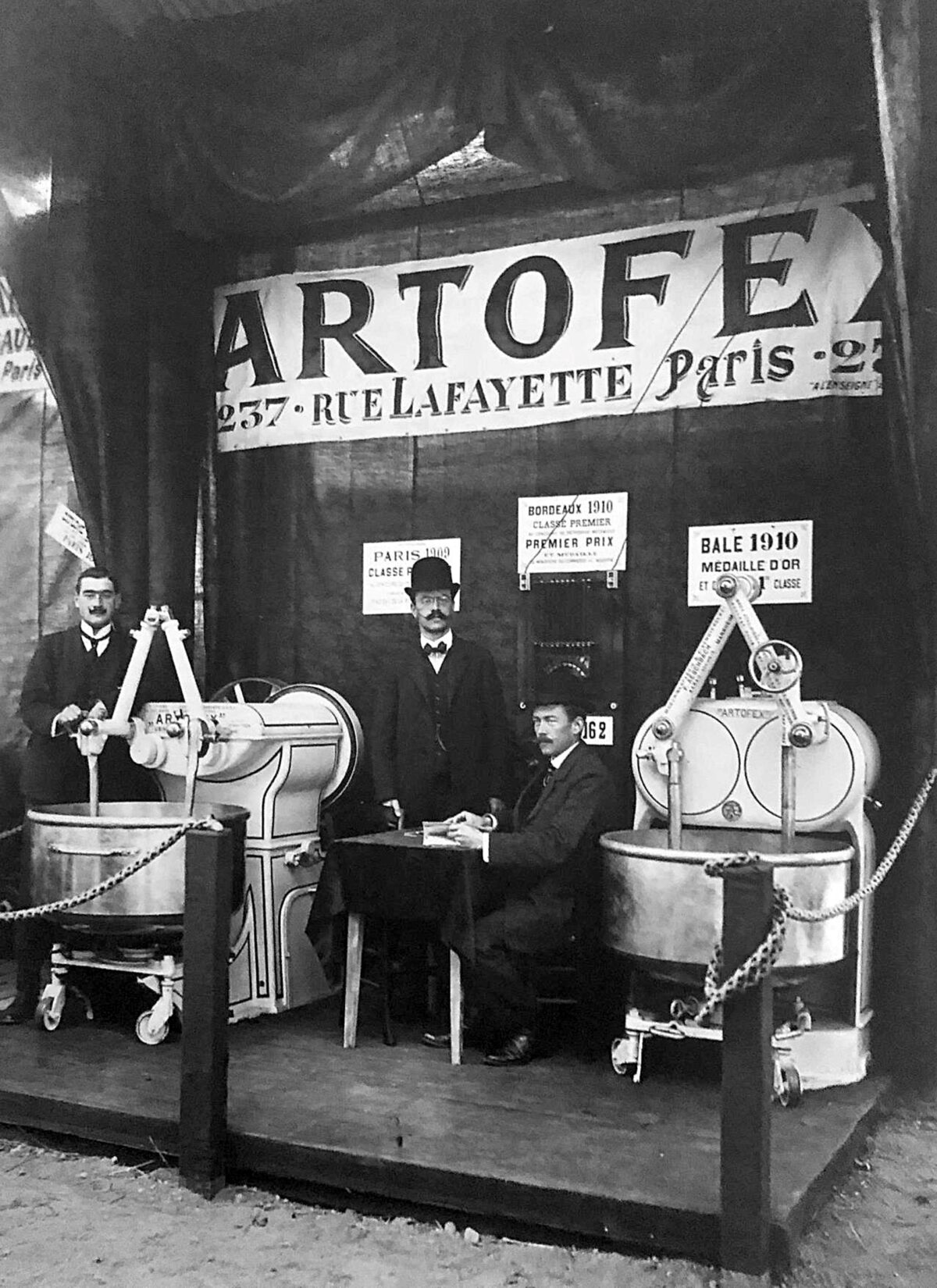
It was a revolution behind closed doors. In 1904, Reinach native Friedrich “Fritz” Aeschbach invented a kneading machine to make bakers’ work easier. But they didn’t want it. Or rather, they did want it. They just didn’t want anyone to know about the mechanical assistance. After all, the belief prevailed in many bakeries that customers expected bread to be baked from hand-kneaded dough.
So Aeschbach had to deliver his turquoise “Artofex”, concealed from curious eyes, to those customers who, while they wanted to share in technical progress, weren’t yet ready to say so in public. The machines were often delivered “under cover of darkness”, his grandson Robert Aeschbach told radio station SRF 1.
But despite the hide and seek, the Artofex began its triumphant march through baking businesses until it finally became respectable. In December 1908, the Tägliche Anzeiger für Thun und das Berner Oberland wrote, “One horsepower is sufficient to process a hundredweight of flour.”
Success brought growth; in 1910 Fritz Aeschbach had a production plant built for his machines in Torfeld, Aarau: the Aeschbachhalle, a brick building with a low-pitch roof and iron pillars placed in a grid formation. Subsidiaries in Milan, Paris and New York ensured that the skilled machine technician’s appliances, now protected by multiple patents, also became an export hit. Baker’s Digest, for example, a trade magazine from the US, praised the “best dough machine in the world,” and the Shah of Persia acquired a machine manufactured in Aarau to mix school chalk. In its heyday, the Maschinenfabrik und Eisengiesserei F. Aeschbach employed as many as 300 men and women; at times it was the largest employer in Aarau. By the time the works closed in 1988, over 50’000 Artofex machines had been sold all around the world.
Thomas Reck and Arton Tishuki stand in front of the Aeschbachhalle with a machine that is very different, but no doubt just as effective. The long building opens onto a large square, flanked by blocks of houses to the left and right. Reck leans against the door of the ride-on cleaning machine and says, “This is the heart and soul of the district.” The two men know every nook and cranny of the 55’000-square-metre district near the Aarau railway station, every manhole, the curb of every pavement. They are part of the three-person caretaking team who look after building maintenance for Mobimo. “It’s a great job,” says Reck.Und genau wie die wieder zum Leben erweckte Industriehalle das Herz des Viertels ist, nimmt das Aeschbachquartier in der Geschichte von Mobimo einen ganz zentralen Platz ein. Es ist das erste, das die Immobiliengesellschaft von Grund auf entwickelt hat.
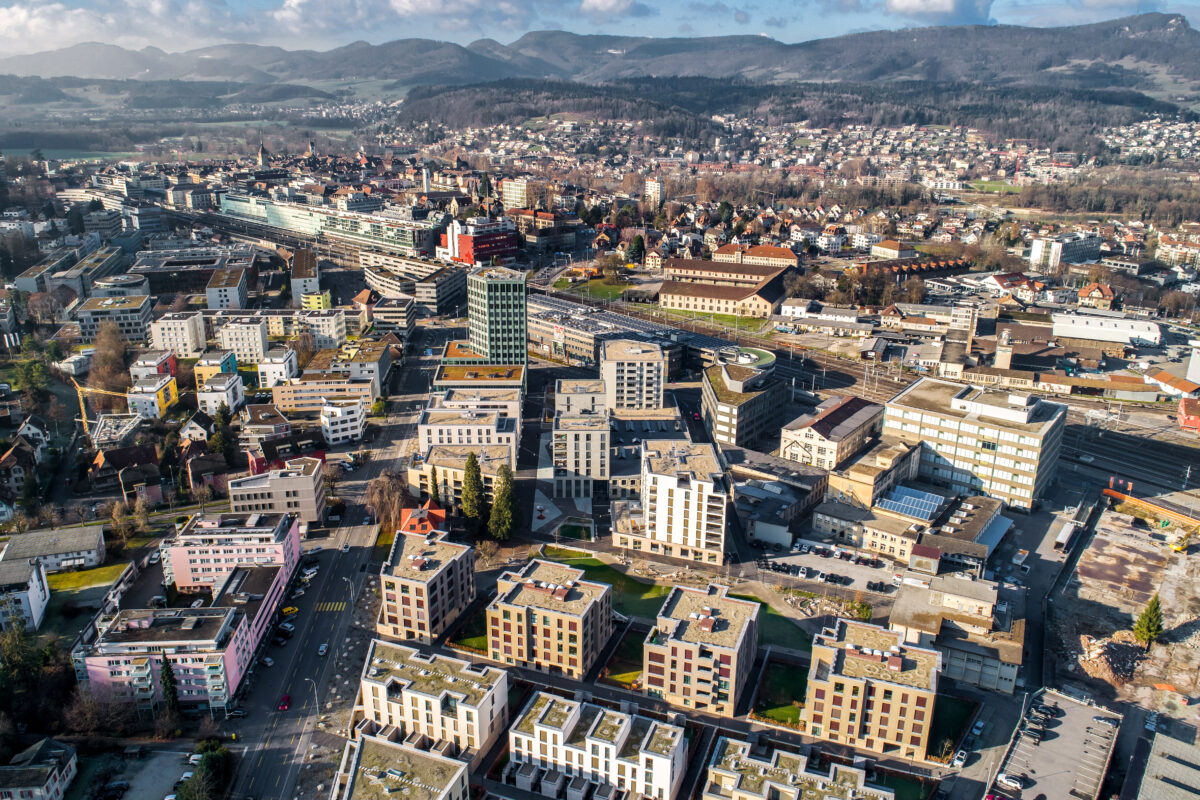
In 2001, Mobimo began to gain a foothold in Aarau with the purchase of a plot of land, and five years later the company bought another plot in the area known as Torfeld Süd. There were big plans afoot. The development of some “random collage” should not be allowed here, then CEO Christoph Caviezel said in a media appearance in late summer 2009. Instead it should become a “new city district”, one that would embrace all aspects such as housing, working and living. Planned construction volume: around CHF 270 million. The real estate company had settled on the development and conversion of whole sites as a business area some time before; it was to become one of their core competencies. The prerequisites: staying power and the diplomatic abilities of a corps of shrewd ambassadors. Only when neighbours, authorities and the government accept and adopt the proposal can a major project succeed.
“THIS IS THE HEART AND SOUL OF THE DISTRICT.”
In fact, just how much potential was lying dormant in deserted industrial sites had already been calculated in 2004 by not one, but three federal agencies in a publication entitled “Switzerland going to waste – development opportunities in the heart of metropolitan areas”. “Many examples show that, with expertise and the necessary will, it is possible to successfully convert industrial sites,” the report found. “Despite this, many millions of square metres remain unused or barely used. It is not just a question of valuable land lying empty, but the fact that every year several hundred million francs in value creation are lost to the owners, and tax revenues to the municipalities.”
Development mainly failed due to lack of interest from investors, the study’s author’s found.
It was different in Aarau. The laying of the foundation stone for the “city in the city”, as the SRF Regionaljournal reported, took place in 2015. The planning application, a Mobimo magazine, the sales prospectus for the apartments and the masterplan for the district were ceremonially buried in a box with a padlock.
The masterplan had been devised by Kees Christiaanse, Professor of Urban Planning at ETH Zurich and owner of architectural practice KCAP. In his research work, the Dutchman focused on what gave a district life, making him a leading expert globally when it came to the revitalisation of decommissioned harbour or factory sites. “We try to get a feeling for the unique characteristics of a site. Then we establish a system of public paths and squares that are always connected to the neighbourhood,” he explained. He added that he was used to criticism in all phases. “An urban planner needs a thick skin.”
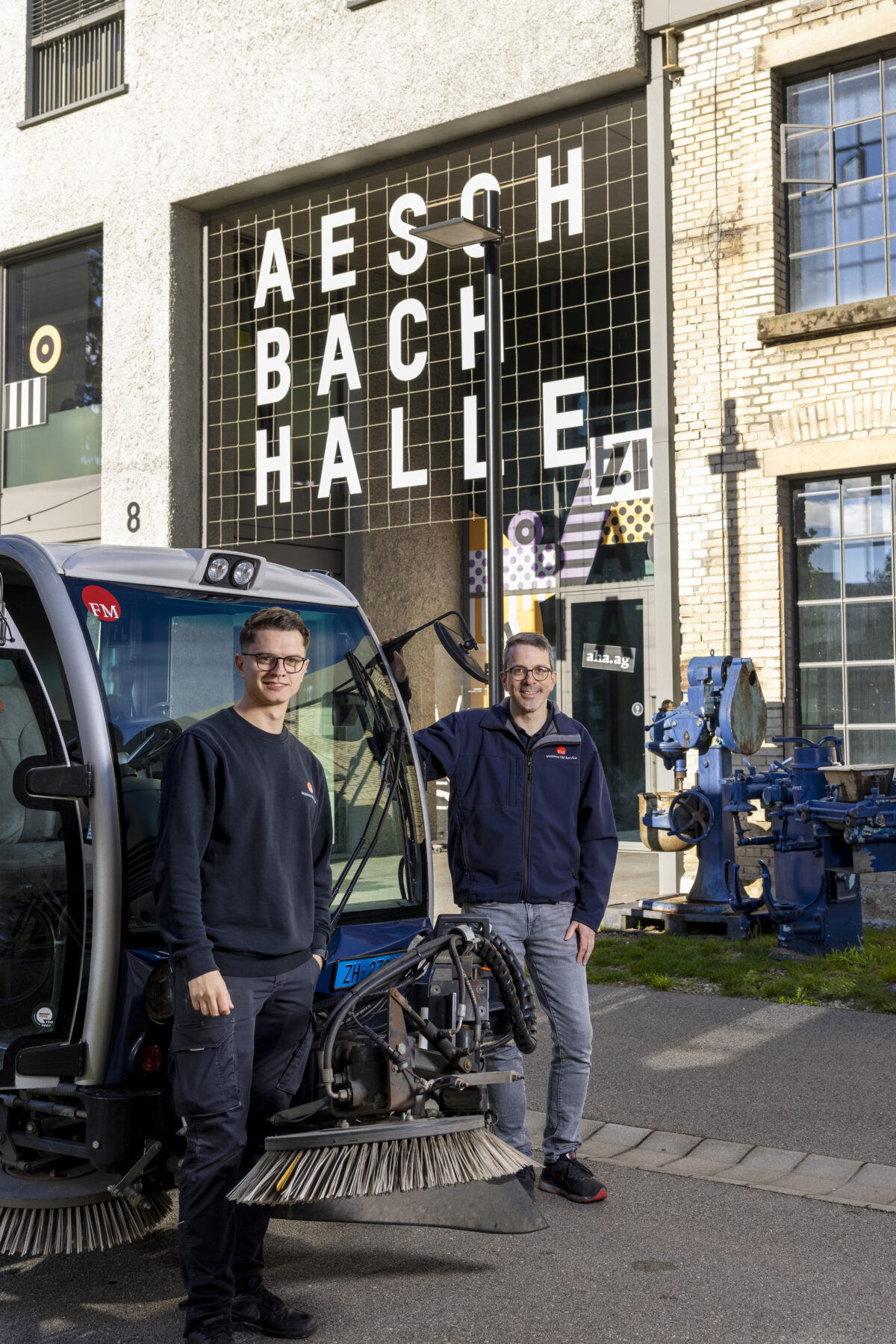
Arton Tishuki (left) and Tomas Reck from Mobimo FM Service in front of the newly revitalised Aeschbachhalle.
“AN URBAN PLANNER NEEDS A THICK SKIN.”
A park, a childcare centre in the old Villa Oehler, a high-rise, offices, apartments to buy and rent, terraced houses, shops – the plan for the Aeschbachquartier provided for all of these. It was to be developed in stages, with various phases of expansion and partners. For example, the high-rise project on Buchserstrasse was built by Mobimo and sold, complete with the building site, to GastroSocial, the pension fund for the hospitality industry. The vision: a district with hardly any cars, a feel-good place, diverse, with gold-standard sustainability.
And in the middle of it all: the Aeschbachhalle. The factory building had lain empty for decades. Graffiti artists had gone wild on its walls, illegal parties were held in the basement. He “swallowed hard” when he saw the inside of the heritage-listed building for the first time, Christoph Caviezel told the Aargauer Zeitung.
This decrepit relic of past times, this industrial ruin – of all things – was intended to constitute the centrepiece of the future neighbourhood. In September 2016, Mobimo laid the foundation for new life in the factory building: it was restored, renovated and expanded. Then, on 4 April 2019, the official opening took place.
“A DISTRICT WITH A PROUD PAST, GROUNDED IN TODAY’S AARAU.”
Pioneers: Kaya and Marco Puma have been running Veloservice Aarau in the Aeschbachquartier since 2016.
One day before, Daniel Ducrey had taken over the operational management of Mobimo. “Everyone involved was present on the opening evening: for example Kris Martin, the artist who had created the artwork for the district residents’ association, representatives of the industrialist Oehler and Aeschbach families, members of Aarau government agencies and residents,” he recounted. “For me, this celebration is a symbol of what we have created: a district with a proud past, grounded in today’s Aarau. Now, residents and visitors will add new chapters to its story.”
One person adding new chapters is Marco Puma. Together with his wife Kaya, he has been running a bicycle shop in the Aeschbachquartier since back in 2016. It was “a big step”, says the man in the flat cap as he walks through the rows of city bikes arranged for sale. He works hard to foster solidarity in the district, made sure that a bakery offered its goods or organised a meet-up with a beer after work. “Even when I first came to the district, I noticed the positive energy,” says Susanne Koch, owner of Haarmonie Coiffure & Make-Up. “It’s cosmopolitan, there’s room for lots of different types of people.”
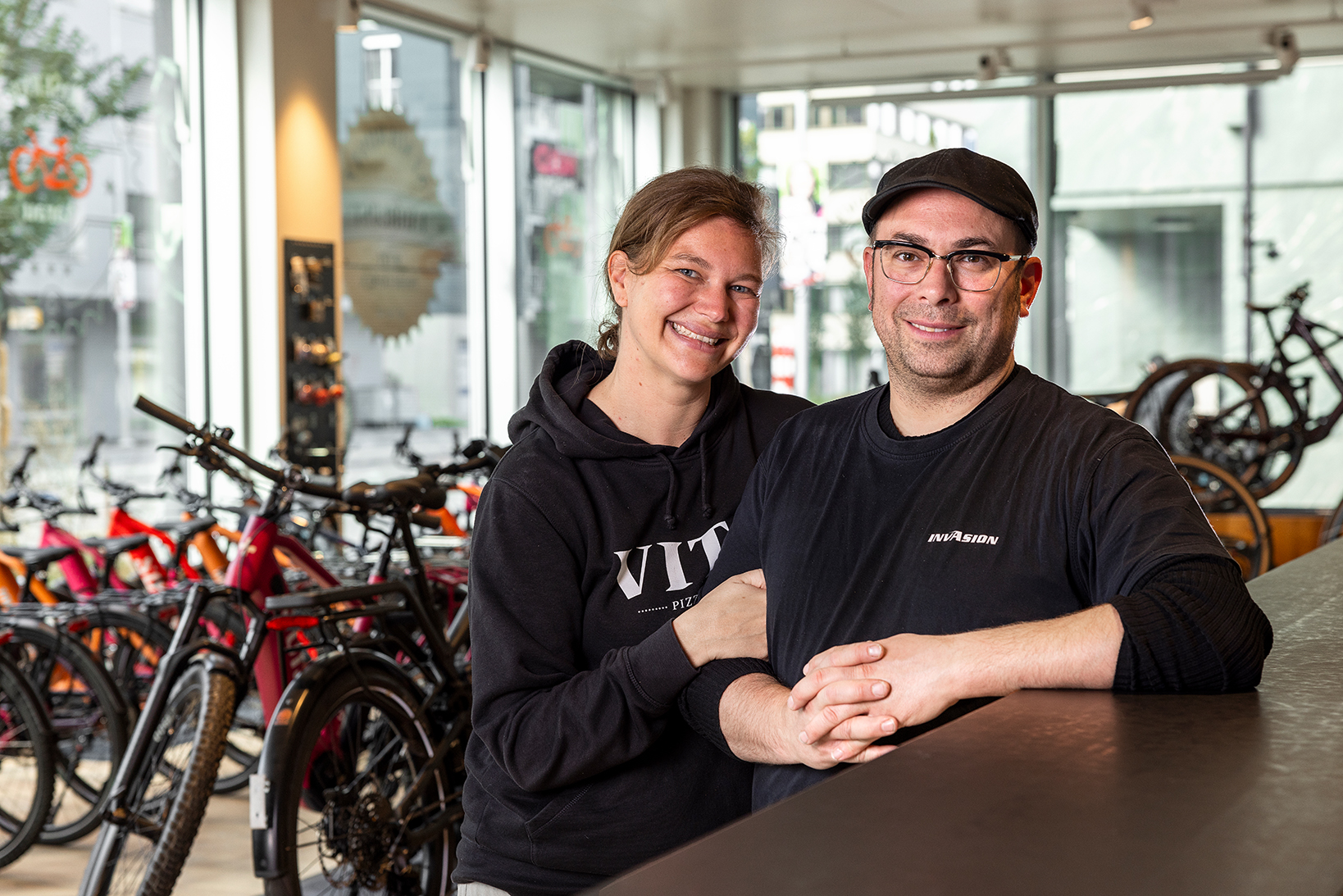
Pioneers: Kaya and Marco Puma have been running Veloservice Aarau in the Aeschbachquartier since 2016.
She has lost some neighbours, though – other small traders who lamented the lack of foot traffic and moved out again or gave up their business completely. The Aeschbachhalle has also had a change of tenants; these days it plays the role of a meeting place, where concerts are held, children play and a restaurant and bar welcome guests.
“In theory,” says Vinzenz Manser, Head of Realisation and Member of the Executive Board at Mobimo, “it takes at least five years before a district works.” In practice, he adds, it’s actually ten. Or even more. “Niederdorf wasn’t opened overnight either,” Manser says, referring to the emblematic old neighbourhood in Zurich. Sometimes, he says, he would like to just sit on a bench for a week in a district and see what’s happening. Get a feel for life there. Manser, 57, has been working at Mobimo for 22 years – almost his whole professional life. He says the firm has kept on evolving, providing fresh impetus, and “that’s probably why I’ve stayed for so long”.
But now and then, change does take patience. Right now, the diggers are starting up again in the Aeschbachquartier. The last stage of the transformation is beginning. A timber residential building – Mobimo’s first – will be built, along with the seven-storey Hallenhaus, built on the walls of the historic Halle 5. The “next big thing” read the enthusiastic headline in the Aargauer Zeitung, and Mayor Hanspeter Hilfiker referred to a “flagship site”.
Susanne Koch stands in front of her shop and looks at her neighbourhood. “I can see the progress, that everything is coming together. And that’s great.”
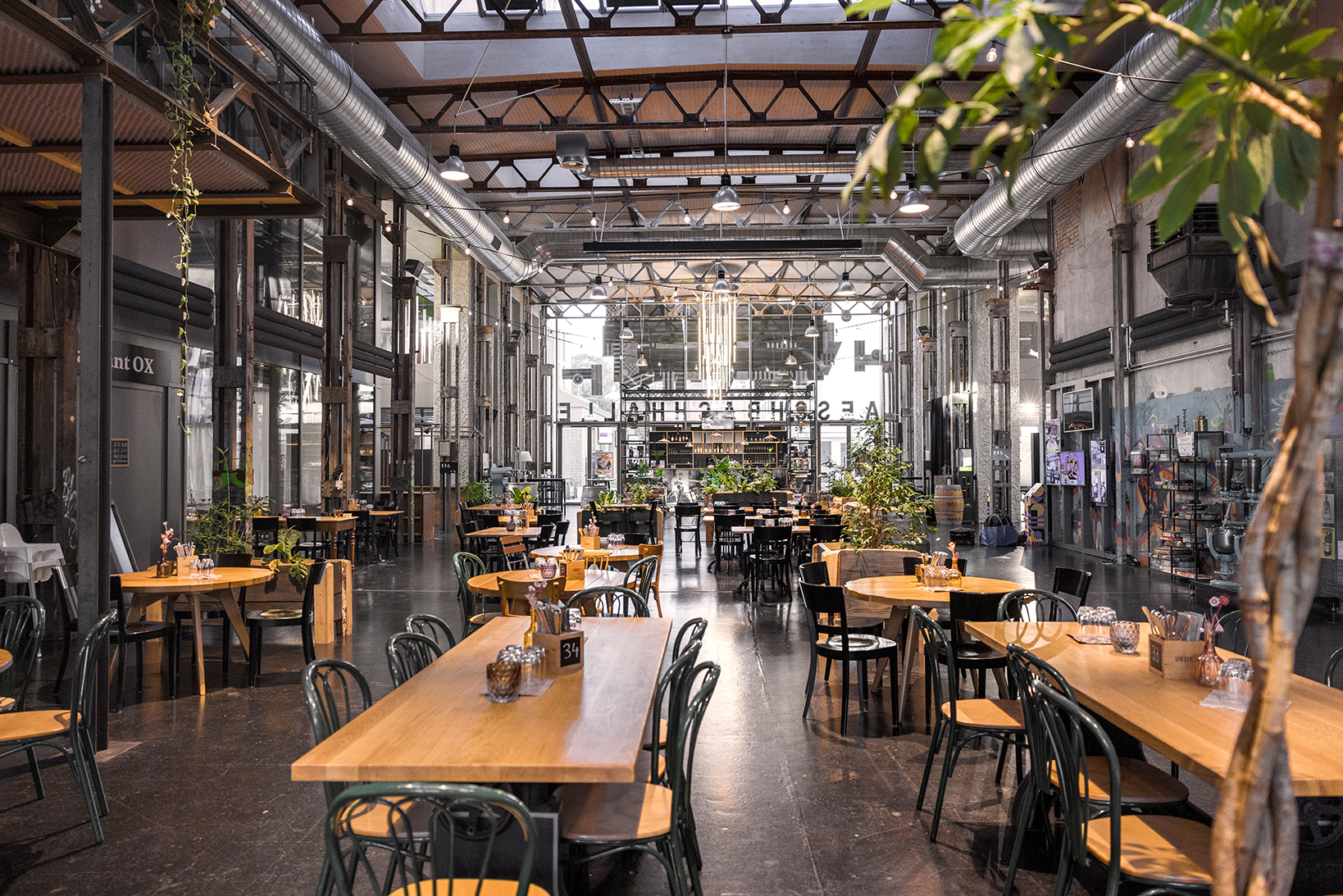
The Aeschbachhalle: where Fritz Aeschbach once built dough machines, the neighbourhood now meets up.


