
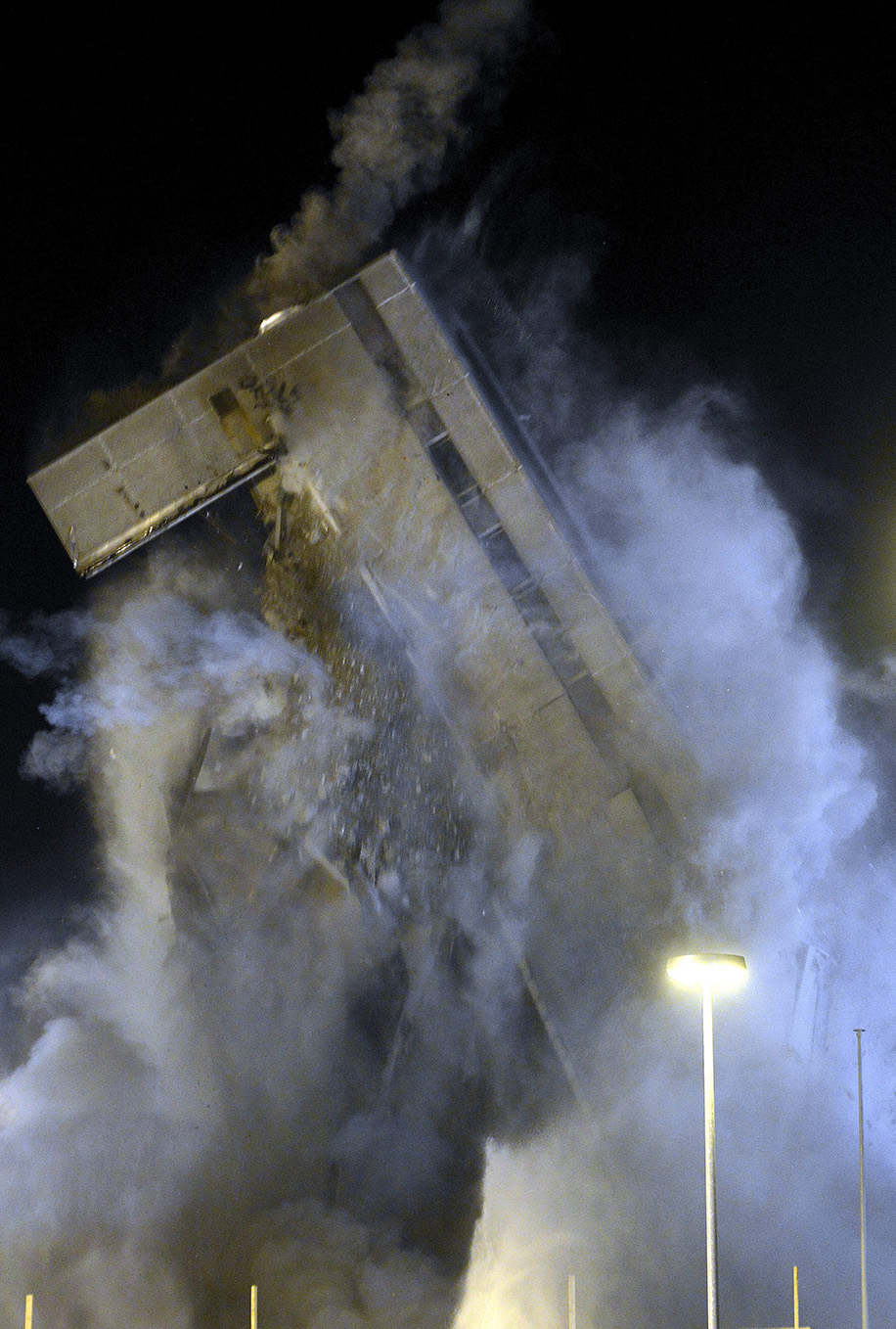
March 2013: The Sprecherhof building in Aarau is demolished.
BANG!
“If it goes wrong, I’ll be the laughing stock of the nation,” said demolition expert Walter Weber in the spring of 2013. And the first high-rise demolition in Switzerland really did cause quite a stir. Thousands of curious bystanders were looking on when the 45-metre-tall Sprecherhof in Aarau hit the ground. The operation on behalf of Mobimo took 75 kg of explosives, 1 500 detonators and three months of painstaking preparation – and was over in five seconds. What remained was an enormous mound of rubble that needed to be disposed of before the development of the Aeschbachquartier could proceed. Ten years later, Weber says of the demolition: “It’s still talked about in the business today.”
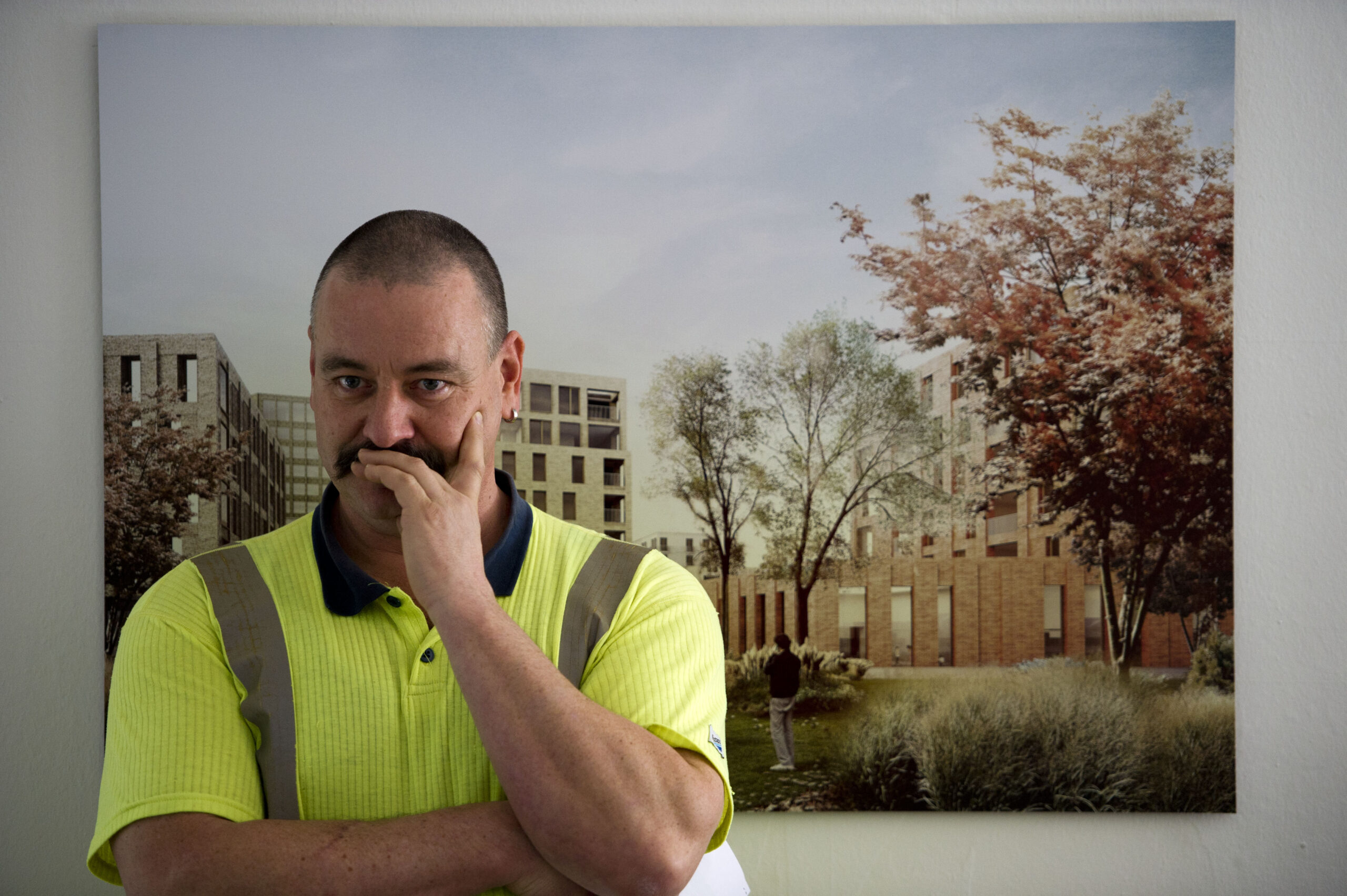
Demolition expert Walter Weber at the media briefing before the demolition.
«Nous être société très sérieuse»
On 23 June 2005, the time had come: Mobimo shares were traded on the stock exchange for the first time. The public offering was preceded by a roadshow that took Chairman of the Board Alfred Meili and CEO Paul Schnetzer to see asset managers in Frankfurt, Lucerne, Lausanne and Geneva. “I had a lot of fun,” Meili recalls. “The only one who was stressed was Paul Schnetzer.” Schnetzer’s French skills, Meili says, were what you would call modest. Because of that, at the presentation in French-speaking Switzerland, Schnetzer said in broken French, “Oui, oui, nous être société très sérieuse.” But this didn’t detract from the success: instead of CHF 100 million, underwriting pledges came in to the tune of over CHF 600 million.
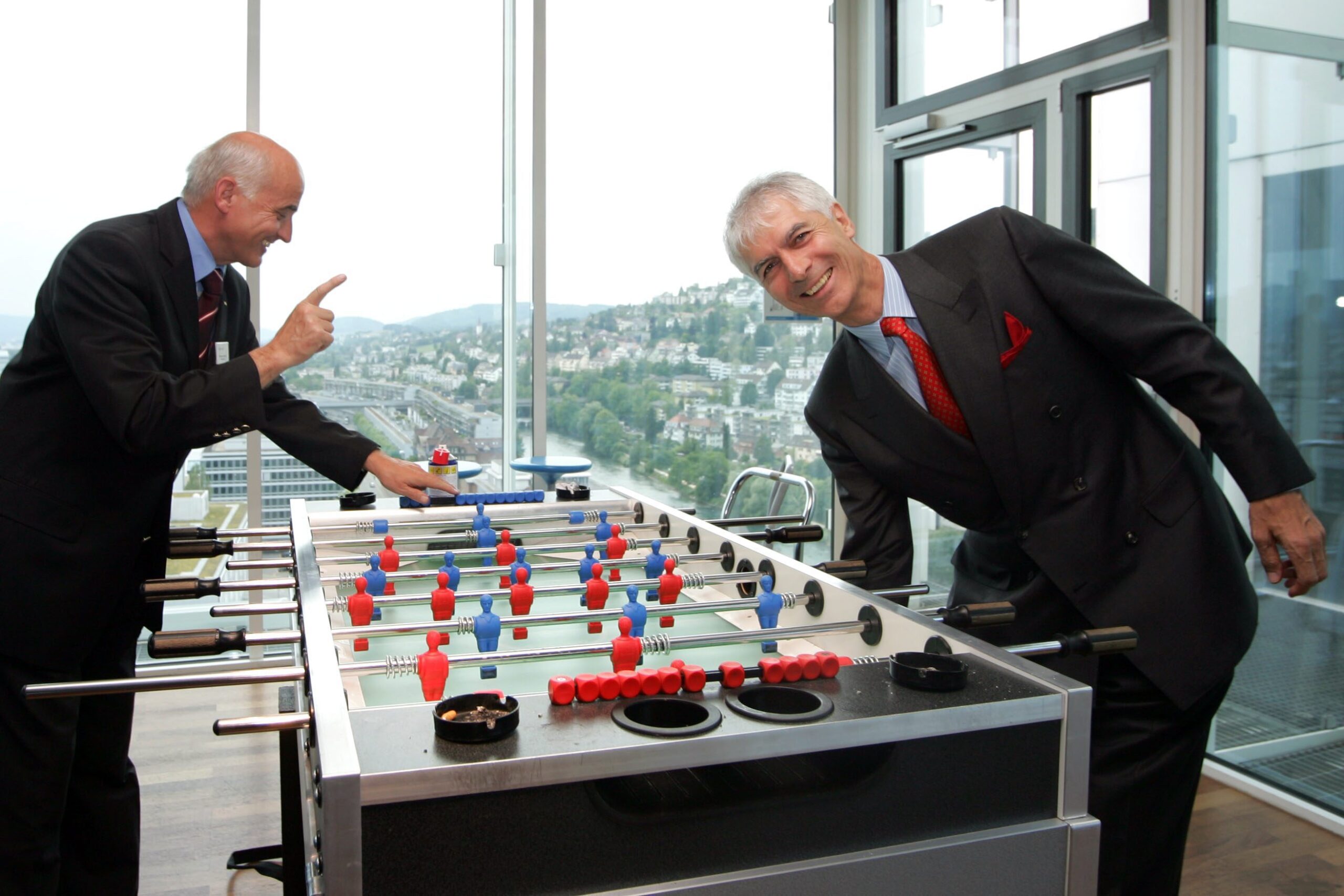
June 2005: Board of Directors member Hermann Gerber (left) and Chairman of the Board Alfred Meili at the media information session for Mobimo’s public offering.
40 metres are not enough
“The tower is standing. It’s a landmark already,” said architecture critic Benedikt Loderer on 11 August 2011 in the Tages-Anzeiger. It was the inauguration day for the 81-metre-tall Mobimo Tower in Zurich West. By that point, the tower had already survived an initiative by the Swiss Democrats to restrict high-rises in Zurich to a maximum of 40 metres and thereby stop the “skyscraper boom”. Roger Diener, architect of Mobimo Tower, stated in April 2009 that he didn’t understand the objection. “High-quality high-rises are an asset.”

April 2010: Construction work on Mobimo Tower.
Red on the outside
The façade of the Mobimo business location in Küsnacht in the canton of Zurich came very close to being blue. “We talked him out of it,” recalls Vinzenz Manser. In 2005, the existing premises in Zollikon had become too small for the growing company, and project manager Manser planned the new build with his boss Alfred Meili. Who liked colour. After blue had failed (“Fades over time”, said Manser), there was another favourite. Meili managed to get this one through with guile. At the final board meeting to decide the colour, he managed to get Mobimo co-founder Karl Reichmuth to choose a red tone, says Meili. Which allowed him to joke from then on: “Look, Karl Reichmuth is only conservative in Lucerne. On the outside, he’s a red.”

September 2006: Mobimo’s business location in Küsnacht in the canton of Zurich is ready for occupation.
Where there is no smoke
Do you see a cigarette? No? Then you’re seeing right. Mobimo-Hochhaus on Escher-Wyss-Platz in Zurich is a first in many respects: the Minergie energy standard, the company name on the façade. But it is also the first non-smoking high-rise in Switzerland. Way back in 2001, nine years before the Federal Act on Protection against Passive Smoking came into force, the building with its 600 workspaces was declared a smoke-free zone. Mobimo initiated the policy, and tenant Bluewin supported it. It also provided savings on operating costs: because there was no cigarette smoke to be removed, a smaller ventilation system could be installed, which used less power.

June 2001: Mobimo-Hochhaus is officially opened.
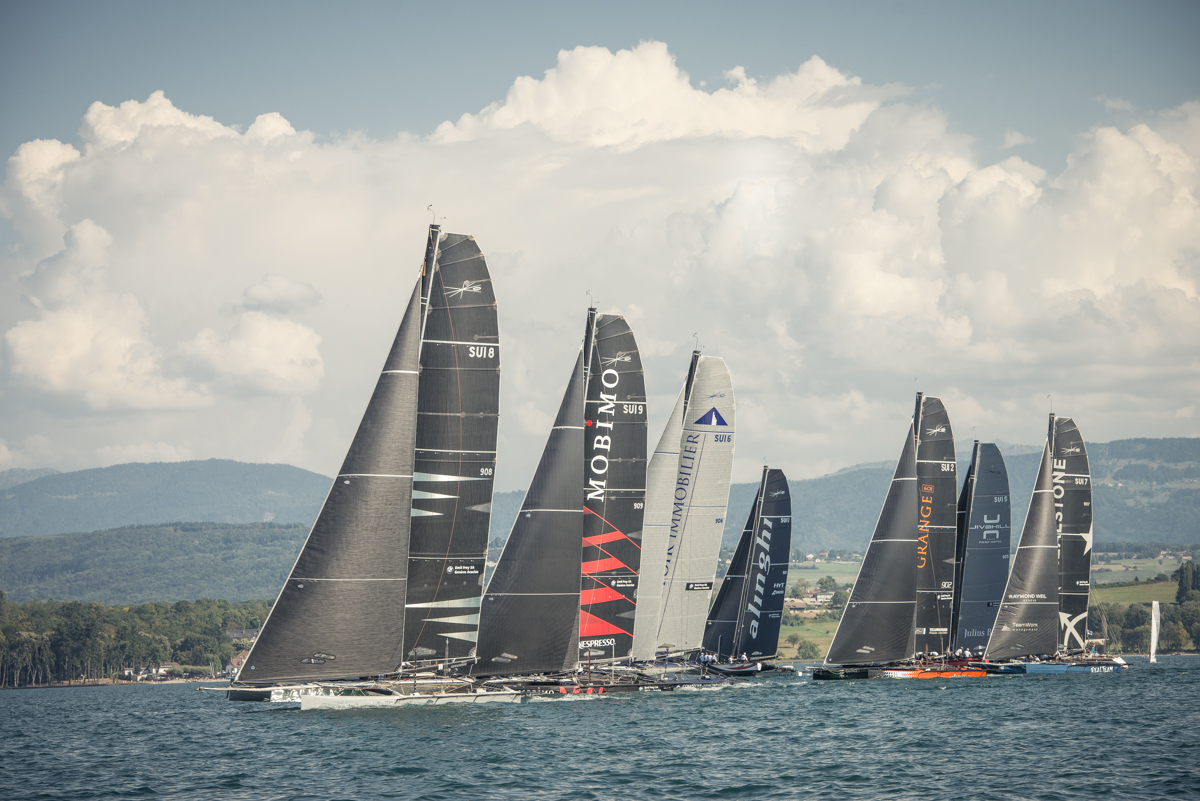
June 2018: The Mobimo picks up speed.
Spellbound
In May 2014, ski racer Fränzi Aufdenblatten christened the Mobimo, skipper Christian Wahl’s boat. More than one bottle of champagne was emptied to mark the occasion. “One for each hull and a few sips for the lake, that’s the tradition,” Wahl explained. The boat’s speedy godmother obviously brought good luck – or simply reinforced existing skills: Wahl, dubbed the “Wizard of Lake Geneva”, won the Bol d’Or, the world’s biggest inland regatta, with Mobimo in 2018.
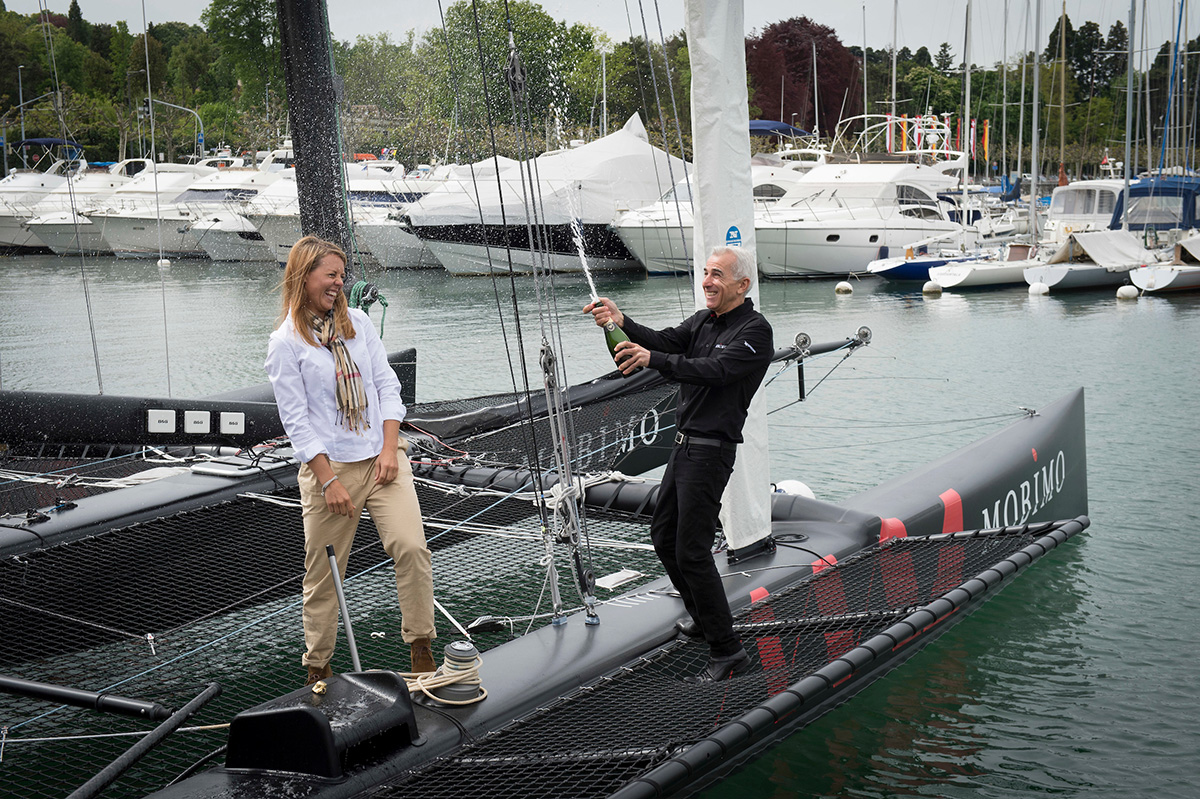
May 2014: Speed ace Fränzi Aufdenblatten and skipper Christian Wahl at the christening of the Mobimo.
Getting wet
Going all-in for the district: in 2017, Marc Pointet, then Head of Mobimo for French-speaking Switzerland, even climbed into the water to promote the redesigned esplanade in the heart of Lausanne’s Quartier du Flon. “We want to become the place to be,” he said. The fountain, designed by artist Vincent Kohler, had previously met with both enthusiasm and criticism. The 24 heures newspaper reported that an architecture critic called it “the height of bad taste”, and said that the “tiny jet of water” verged on “obscenity”. Pointet countered calmly: “We don’t want artworks that don’t stand out.” An amplifier is also part of the bronze sculpture; it symbolises the importance music has had in the district from the start.
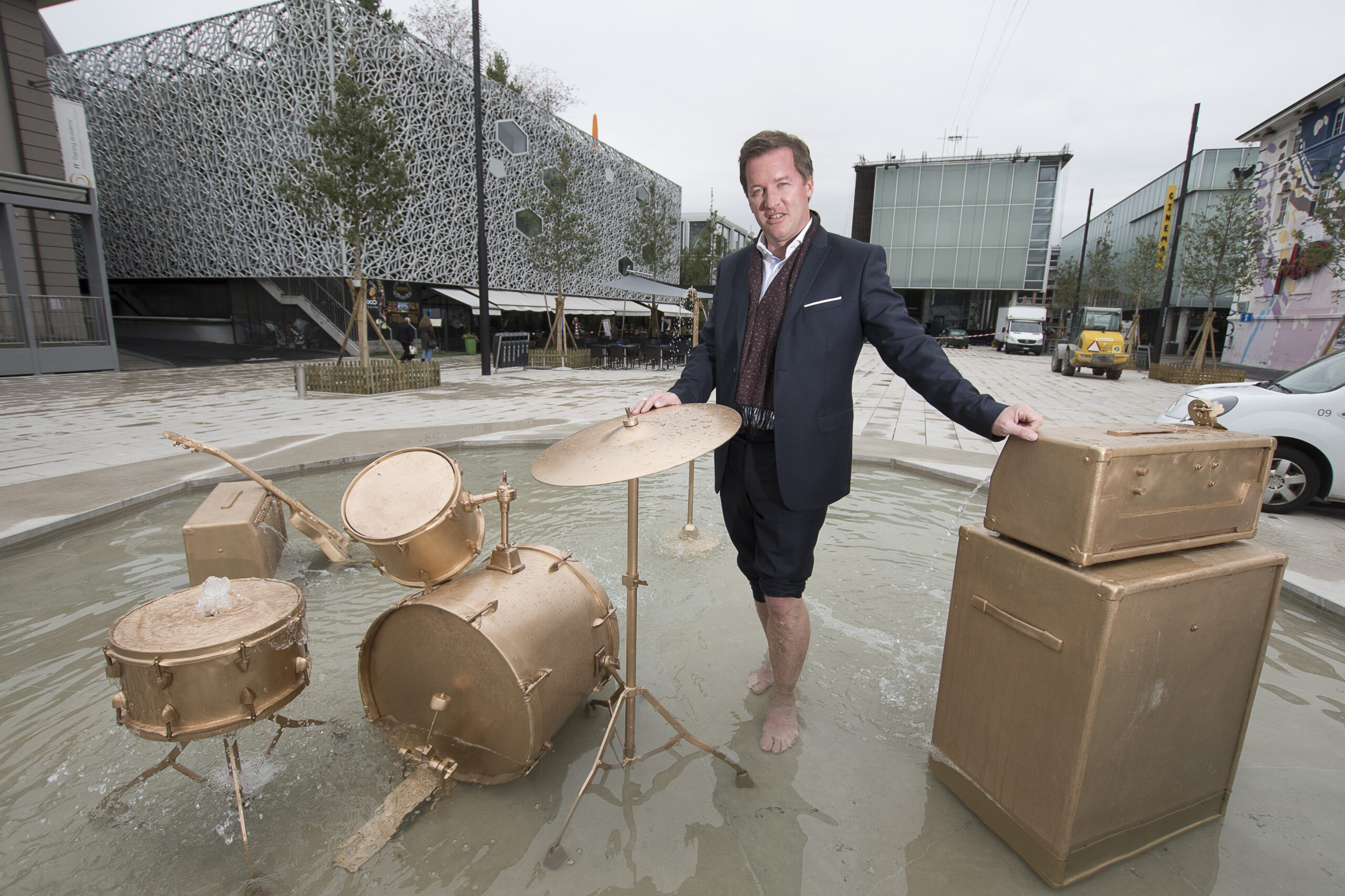
October 2017: Marc Pointet in the fountain of the redesigned esplanade in Flon.
The colourful fortress
In 2013, when Mobimo was presenting plans for the development of the Labitzke site in the Volkshaus in Zurich, occupiers disrupted the media conference. Wearing paper bags over their heads, they announced their resistance. “It would be a pity if they delayed our work,” responded Peter Grossenbacher, member of the Mobimo Executive Board. He may have already surmised how much more challenging the coming months would become. The 10’000-square-metre Labitzke site in Altstetten with the Autonomer Beauty Salon was the site of one of the largest squats in Zurich for around three years. During the eviction in August 2014, police removed a group of activists one by one from the Labitzke tower. “The colourful fortress has fallen,” wrote the NZZ.
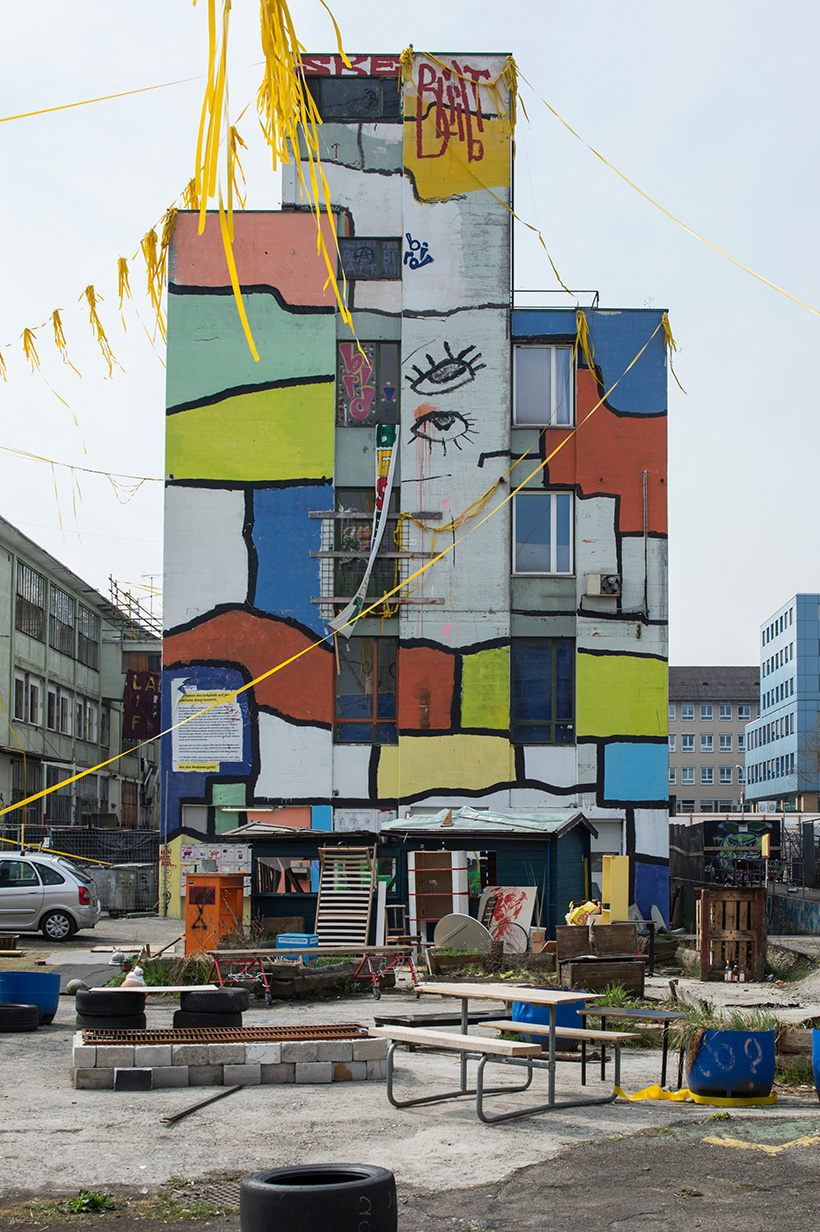
2014: The occupied Labitzke site in the Altstetten quarter of Zurich.
An important role
Sometimes buildings play more than a supporting part in films. Example, anyone? Here are a few: the motel in Psycho, the McAllister house in Home Alone, or Tara in Gone with the Wind. So it followed almost naturally that Mobimo would support the Zurich Film Festival. The sponsorship started in 2013 and is still going today. But even with all the glamour there are still stand-outs. The highlights of the highlights, so to speak. For example, in 2017 when tennis star Roger Federer was a guest at the opening night presented by Mobimo, and all the other celebrities on the green carpet turned into fans themselves. The film – as befit the guest – was Borg/McEnroe by Danish director Janus Metz. “Tennis used to be rock’n’roll. I would have liked to be part of that generation,” Federer declared.
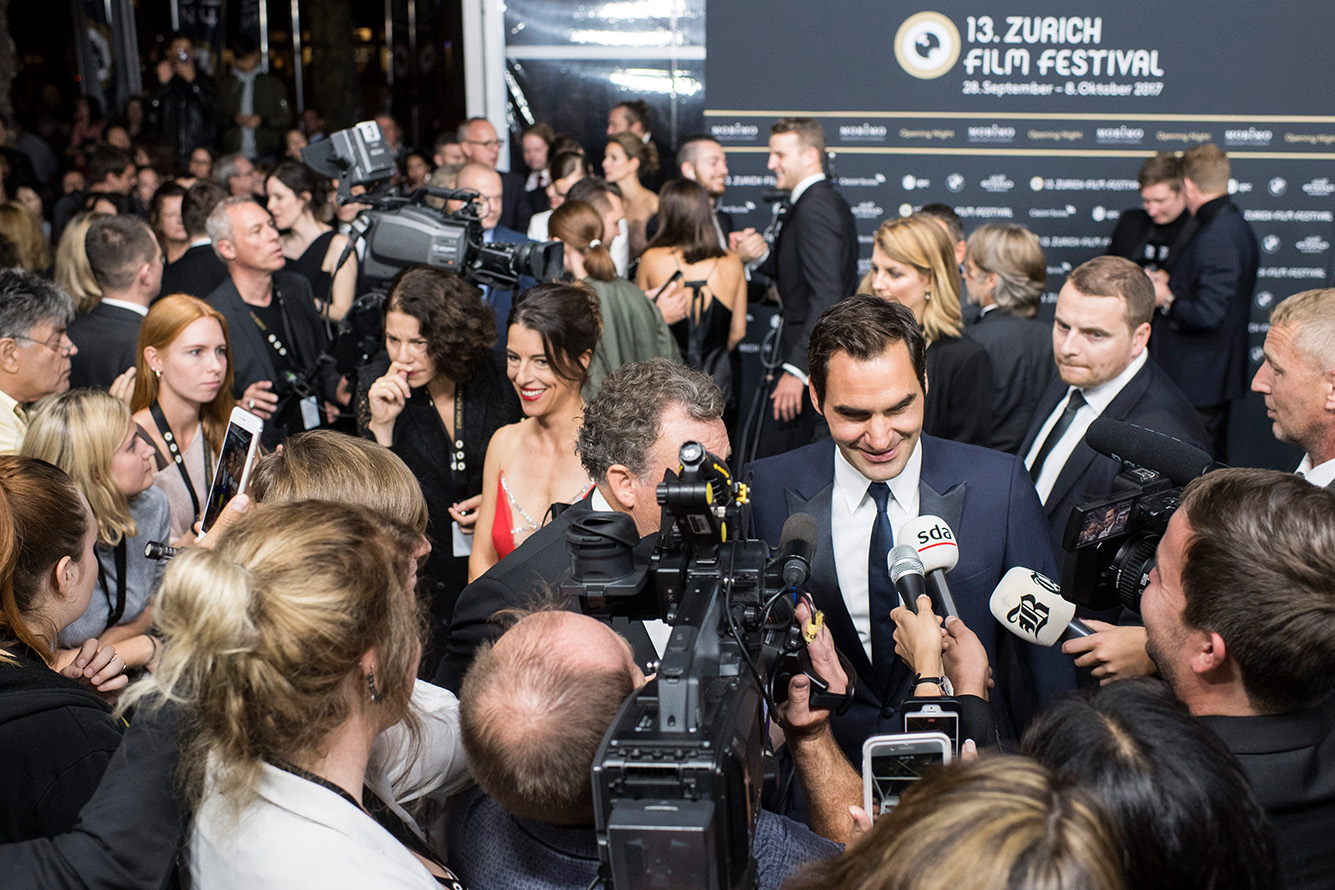
September 2017: Roger Federer at the Mobimo opening night of the film festival in Zurich.
Shake on it
“He walked once around the whole district, without saying a word. Then, when he came back to the Place de l’Europe, he shook my hand and said, ‘We’ll do it.’” That’s how Paul Rambert remembers the decision of then Mobimo Chairman Urs Ledermann on the merger between Mobimo and LO Holding Lausanne-Ouchy. The two companies merged at the end of 2009. For Mobimo, this was the long-awaited move into French-speaking Switzerland; the Romandy portion of the portfolio increased from 1% to 28% in a single stroke. Paul Rambert played a crucial role in the development of the showcase Quartier du Flon in Lausanne, and sat on Mobimo’s Board of Directors until 2015. Lausanne-Ouchy S.A. had re-planned and built the Quartier du Flon, a former industrial district in the heart of the city, which was threatening to fall into disrepair.
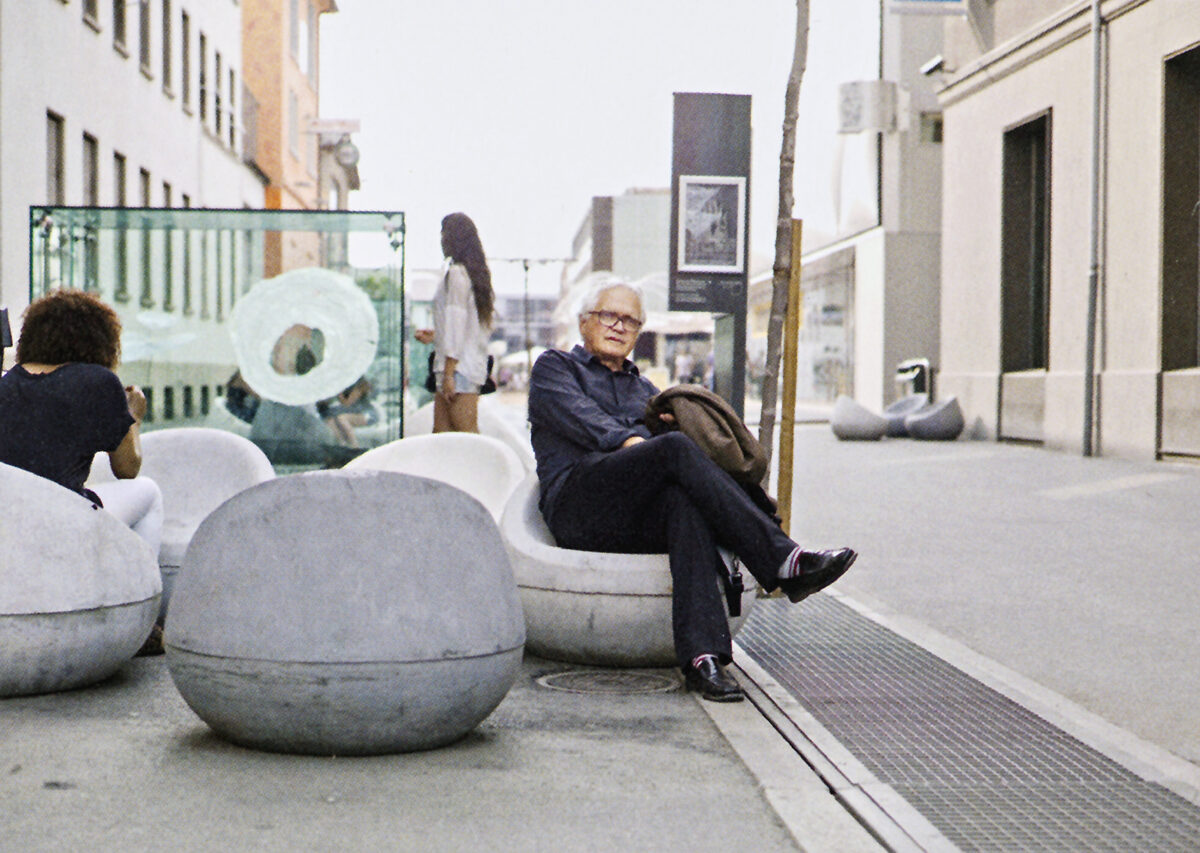
November 2009: Paul Rambert was head of LO Holding when it merged with Mobimo.


