

Not Vital: “The no problem sculpture”, concrete, Zurich, Mobimo Tower, 2011
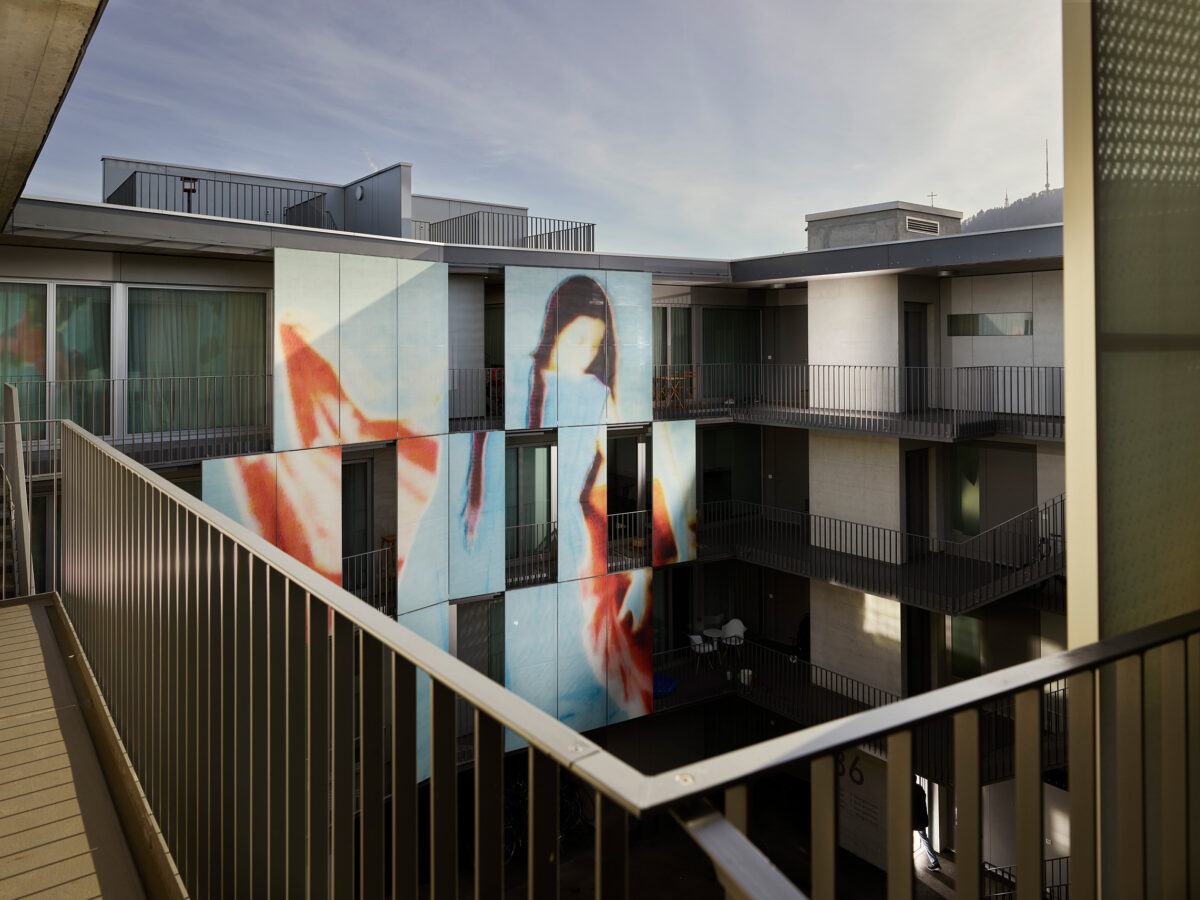
Annelies Štrba: “O.T”, print on weatherproof sliding panels, Zurich, Letzihof, 2016
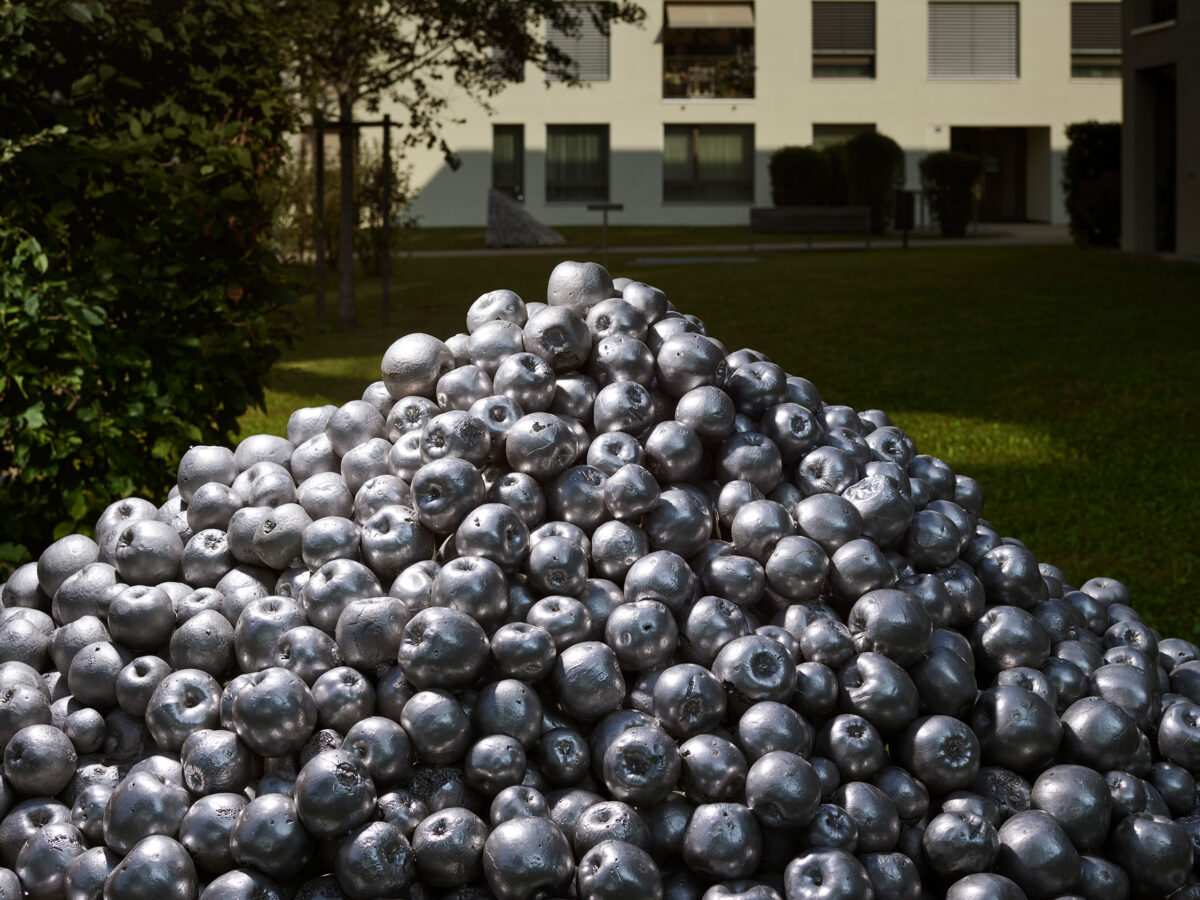
Yves Netzhammer: “The language plays time or scrumptious was the apple juice”, aluminium, Affoltern am Albis, Ova Site, 2014
A “meteorite falling on Zurich” was how Graubünden artist Not Vital described his sculpture when unveiling it to the public in 2011. The total length of the edges of the shotcrete cube was exactly 81 metres, precisely the height of the building whose exterior Not Vital’s work was designed not just to enhance but to embody – Mobimo Tower in Zurich West.
Not Vital named the cube “The No Problem Sculpture” as a reminder that in Niger, where he had an 81-metre-deep well dug as part of the project, many of the problems that occupied people in Switzerland were not problems at all. Or, as Not Vital himself explained, if he hadn’t won the art project competition held by the client, it wouldn’t have been a problem.
And the sculpture very much lived up to its name. The approval process and erection both went without a hitch. Then came 2021. And with it a postulate by municipal councillors Stefan Urech (SVP) and Urs Helfenstein (SP). The two of them just didn’t like the artwork. They thought it was too big. Too ugly. They would have liked trees and benches instead. In short, the politicians demanded that Zurich City Council ask Mobimo to remove the sculpture from its own private land.
While the incident demonstrates how apt Not Vital’s thinking was when naming his work, it shows something else, too: art in public spaces causes a stir. The angel by Niki de St. Phalle in Zurich’s main railway station was dubbed “an oversized Sennentuntschi” (alpine demon) by critics in 1997. And the Meret-Oppenheim fountain in Bern, “a ventilation stack”. In 2018, Jutta Langhoff, then a Mobimo project manager, explained in NZZ am Sonntag that it didn’t worry her when people argued about art on buildings. “On the contrary, it should be something to muse on beyond the everyday.”
“ART ALWAYS MEANS GETTING OUT OF YOUR COMFORT ZONE.”
Mobimo has supported art since its beginnings. “Some integrated art, where possible, doesn’t make a great difference to costs,” said founder Alfred Meili, and it brings happiness. The development process was later professionalised, and since 2013 involvement has been focused on the programme “Mobimo & Arts”. Now selected artists are invited to participate in an ideas competition at an early stage of the building project; an independent jury selects the winning project. “Art is not simply glued onto a finished building – it is integrated into the overall project,” NZZ am Sonntag wrote. And when it comes to the artworks, there are no limits: reliefs, light works and sculptures, plus façade designs and fountains. “Art always means moving outside your comfort zone,” says curator Friederike Schmid. She has advised Mobimo & Art as an art expert for many years.
The initiative brings art to the people who enter and leave the Mobimo buildings, or simply walk past them; it creates a strong symbolic connection and a sense of identity. It’s not about decoration or improving architecture. “We don’t want to just build with concrete – we want to create harmonious and liveable environs.” Geneva artist Christian Gonzenbach explains it like this: “The location of sculptures has a big influence on their function. In a museum they are there to be observed; in the heart of a residential development they are part of life.”
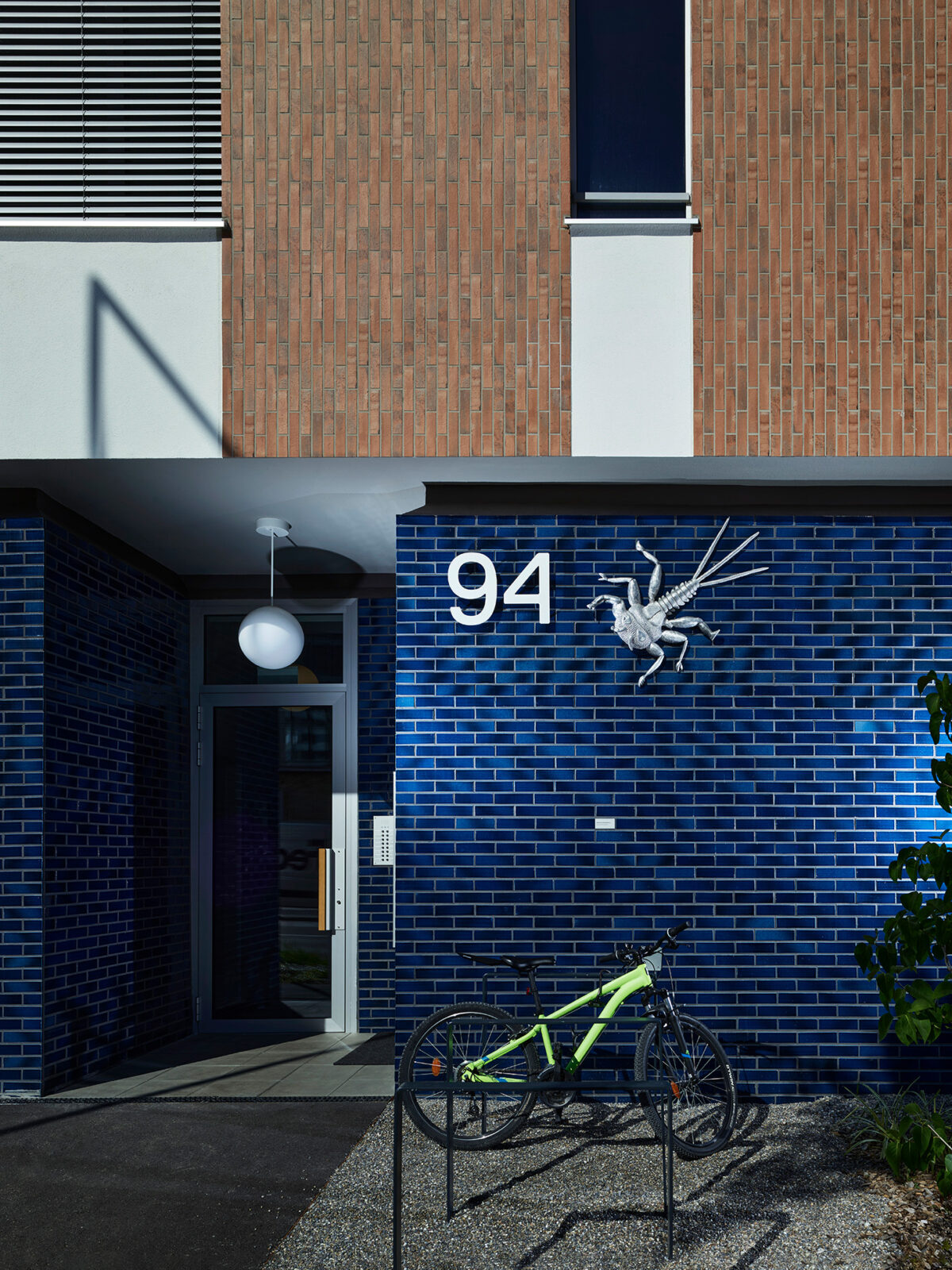
Annina Thomann: “The strong ones”, aluminium, Zurich, Manegg, 2023
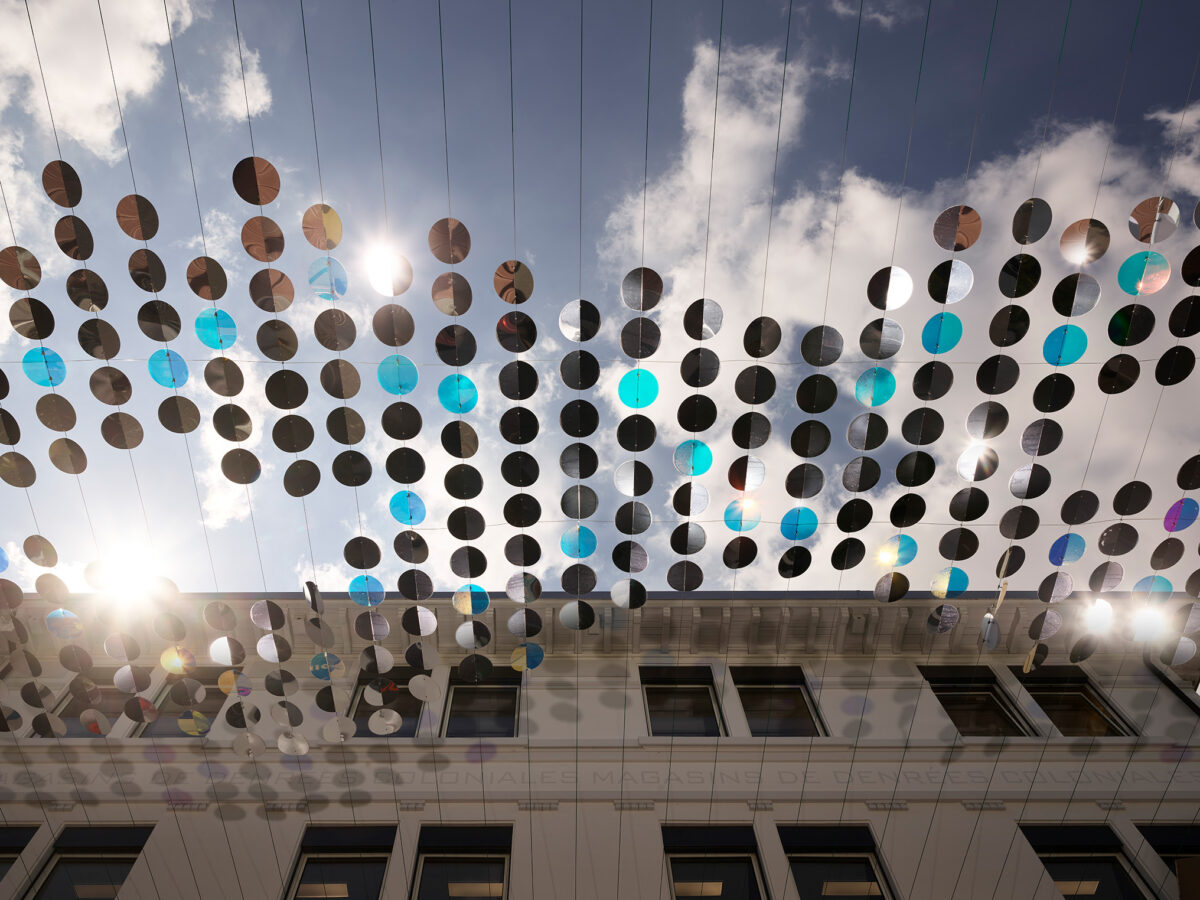
Atelier Schlaepfer-Capt: “Rivière suspendue”, aluminium / acrylic glass / stainless steel, Lausanne, Quartier du Flon, 2020
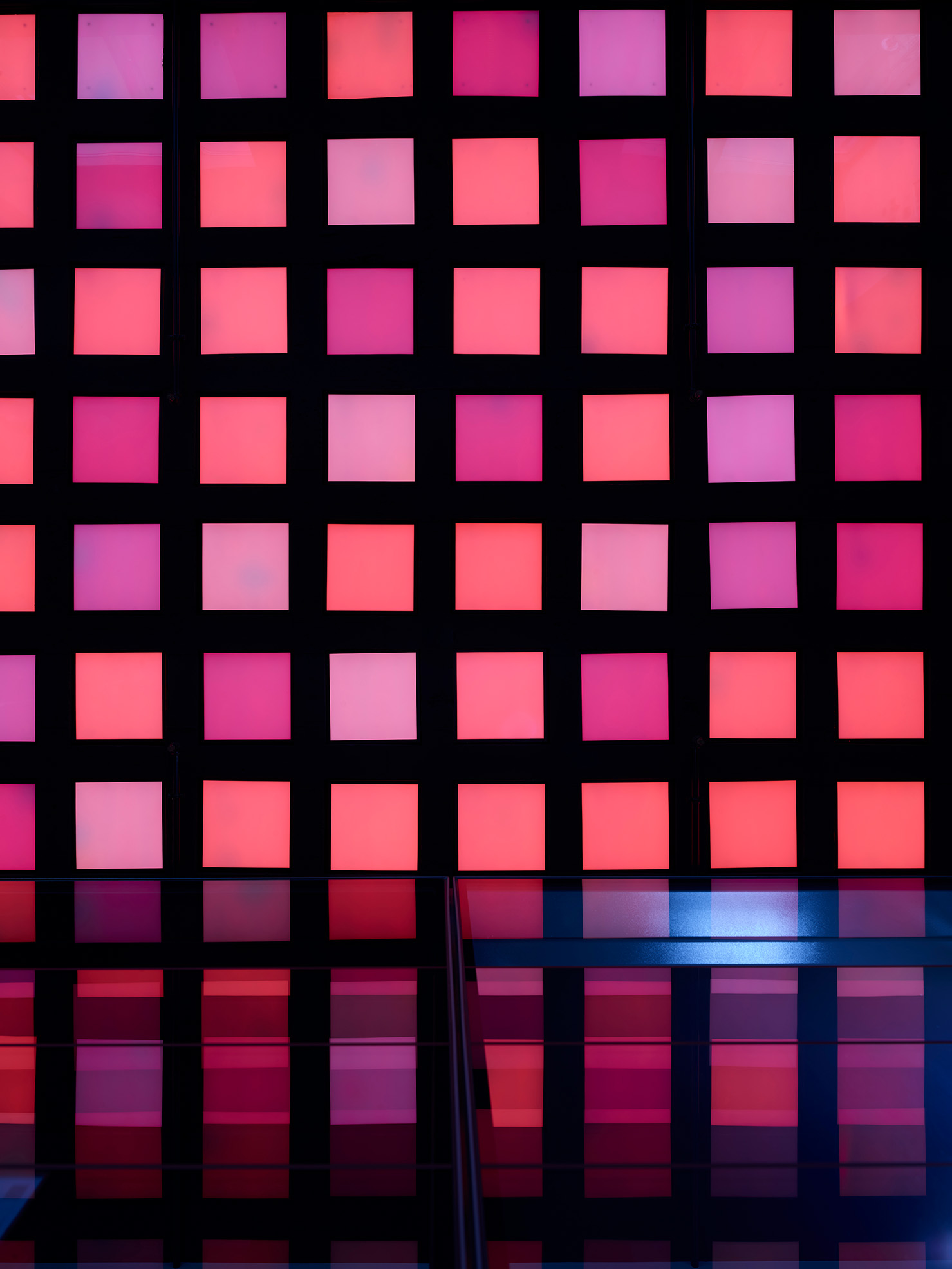
Sophie Bouvier Ausländer: “Upside down”, RGB programmed LED lights Lausanne, Quartier de la Rasude, 2013
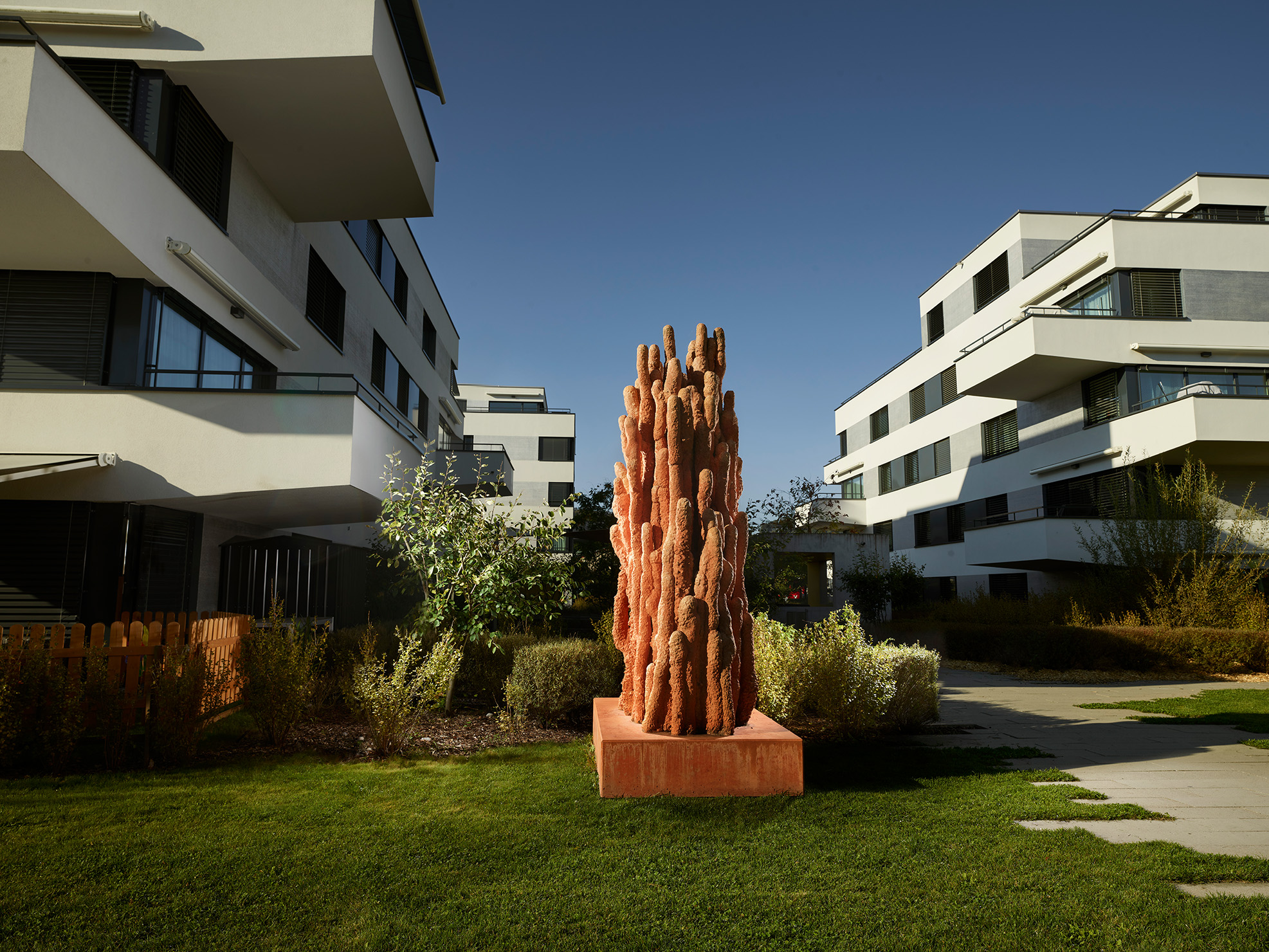
Christian Gonzenbach: “Curry and paprika”, concrete, Regensdorf, Sonnenhof, 2015
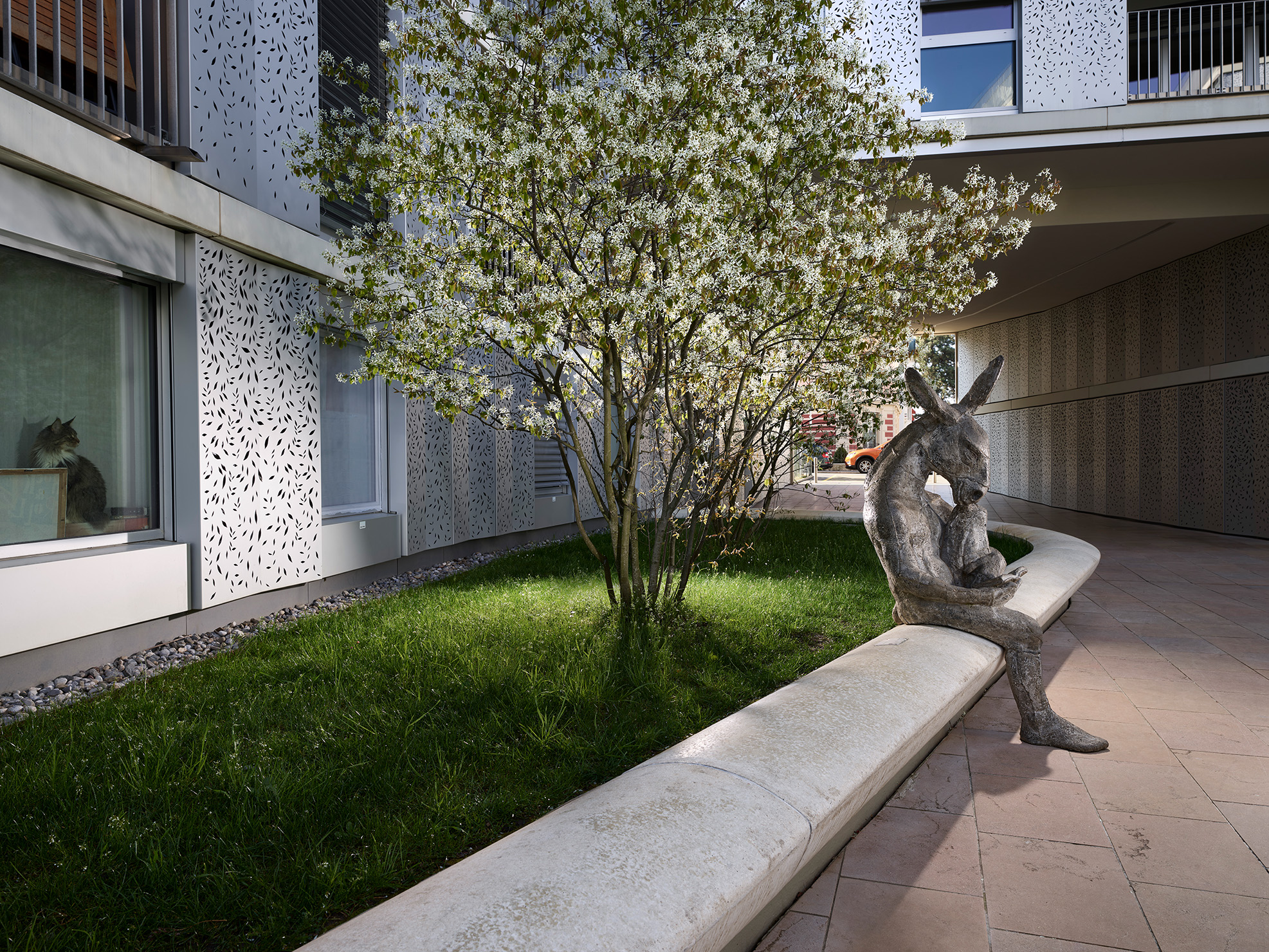
Nikola Zaric: “Côté cour — Anehom Lisant Voltaire et femlièvre”, polychrome concrete, Lausanne, Petit Mont-Riond, 2015
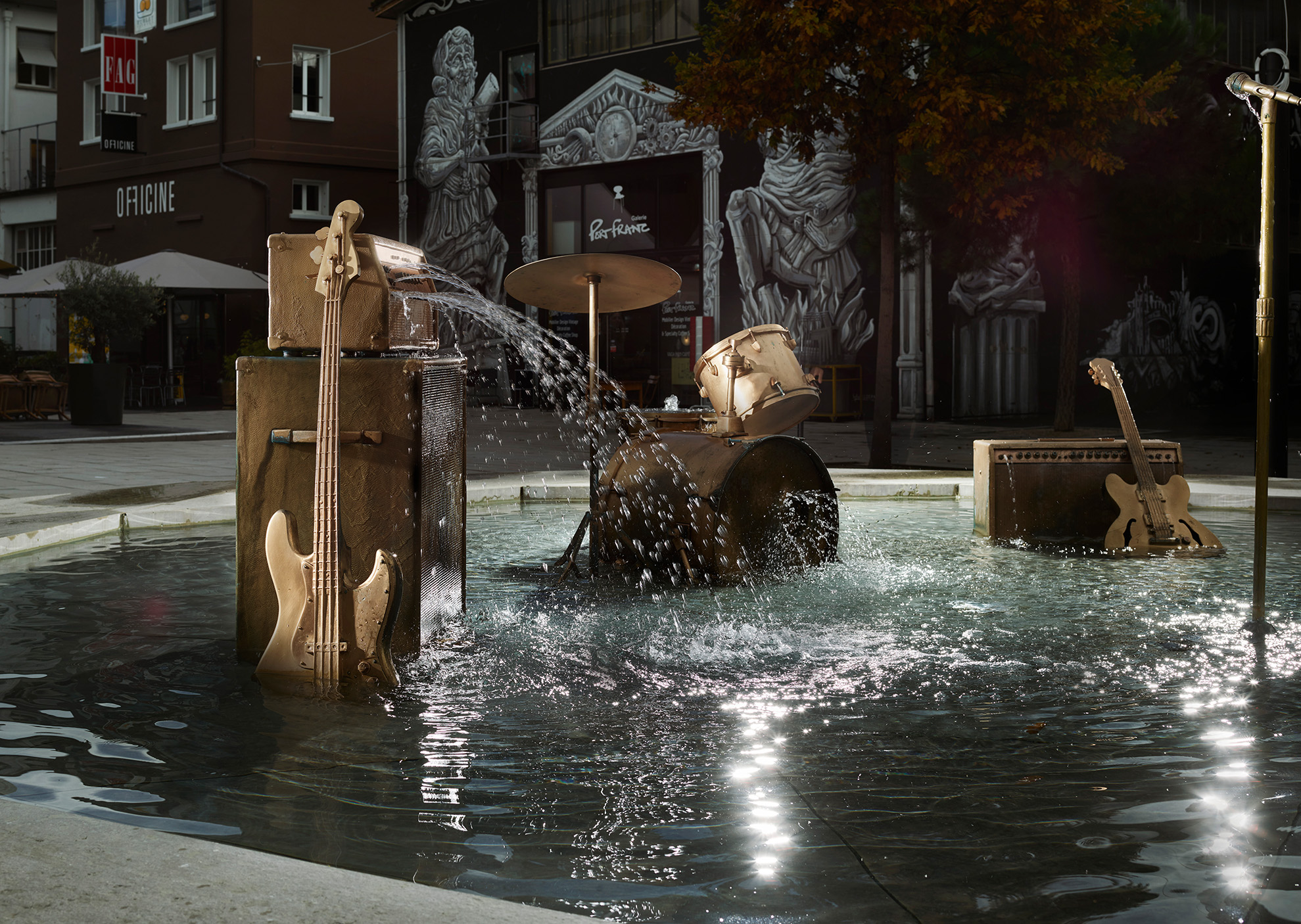
Vincent Kohler: “Unplugged”, bronze, Lausanne, Quartier du Flon, 2017


