
A district that’s Like no other: Le Flon
When Paul Rambert talks about the Quartier du Flon, these are the phrases he uses: “C’est un quartier pas comme les autres” – There’s no other district like it. And: “Rien n’est jamais terminé!” – Nothing is ever finished. Architect Rambert dedicated a chapter of his career to the vision of Flon, and the 79-year-old has played a major part in what the district in the centre of Lausanne is today: a meeting place for residents, a mustsee for tourists, a successful mix of shopping, working, studying, living, culture, sport and leisure. Flon is what many urban areas in Switzerland would like to achieve with their development plans.
Flon is part and parcel of Lausanne’s identity. It is a district with its own public WLAN named after it. A district with an award-winning underground car park and very good connections to public transport. A district whose residents and business owners still refer to themselves as “les gens du Flon” – the Flon people. And last but not least, the district is also a stroke of luck for Mobimo in French-speaking Switzerland.
The Flon is actually the river that flows through this part of Lausanne. In the 19th century, the “Compagnie du chemin de fer de Lausanne à Ouchy”, Lausanne-Ouchy or LO for short, built the metro line from Ouchy to the city centre, filling in the river bed of the Flon. The Grand-Pont on the south-eastern boundary of the district, of which only the uppermost arches are visible today, bears witness to this. The rest of the bridge is stuck “up to its knees in the new terrain”, as the magazine Hochparterre phrased it. Today, the Flon is channelled underground in a heritage-listed tunnel under the Flon plateau.
On the plateau, at the end of the 19th century, LO operated a goods yard with tracks and warehouses. When the LO group ceased railway operations in the 1980s and sold the Metro to the Lausanne public transport operators, Lausanne’s subculture moved into Flon: small businesses, creatives, party venues. Lausanne rappers Sens Unik had their recording studio here in the 1990s. In a portrait of Sens Unik by radio and television station RTS, a young Carlos Leal can be seen on the roof of a building in Flon; hidden references to the district were included on the album cover of Chromatique from 1994. Les gens du Flon lived in the attics of the warehouses, and the legendary club MAD opened its doors in the district in 1985. Newspaper NZZ described MAD as “a bit crazy, a bit underground, a bit edgy”. Flon was said to be the “Soho of Lausanne”.
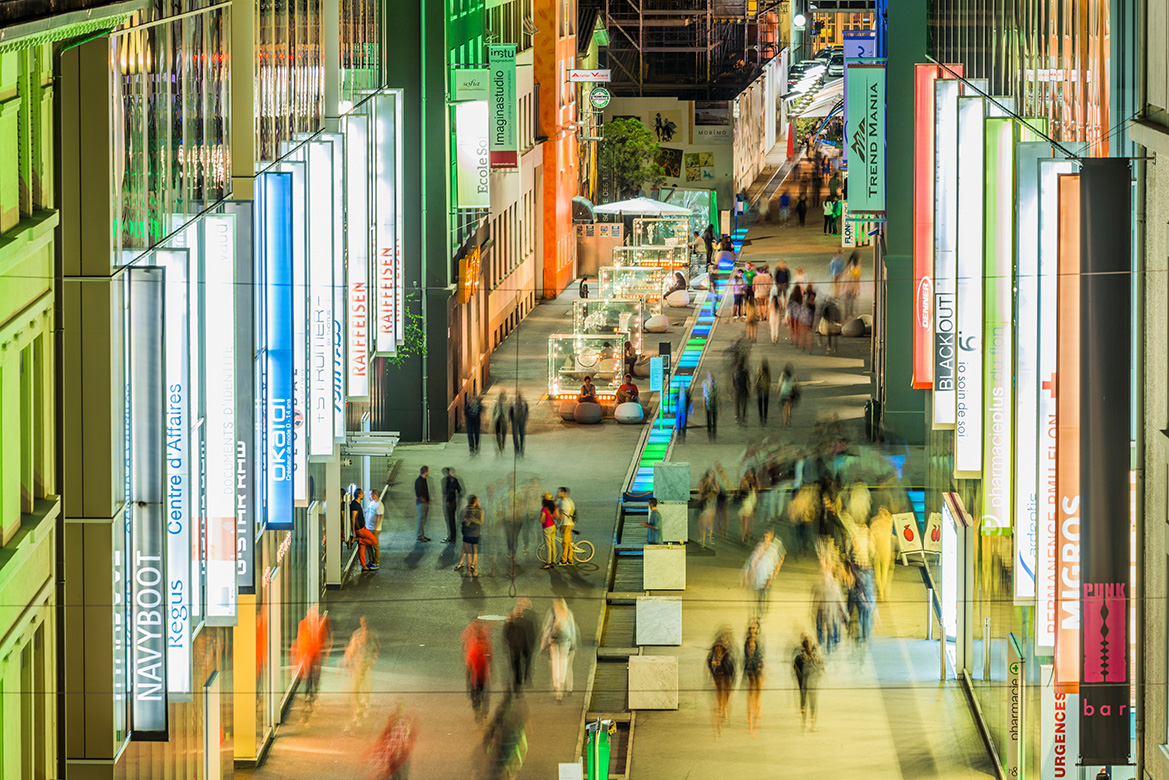
Where once there were railway tracks, people now shop or stroll: Les Mercier with Voie-du-Chariot, 2008.
But Flon is also a big car park and a place where projects are destined to fail. Among the numerous conversion ideas that were never realised is one by the two giants of Swiss architecture, Mario Botta and Vincent Mangeat. And Flon became a no-go area where prostitution and the drug scene took root. “It wasn’t quite as bad, but similar to Letten in Zurich,” Paul Rambert recalls. The bad reputation of the district reached a tragic peak in autumn 2000, when 27-year-old drug-addicted prostitute Plume was the victim of a brutal crime. A man raped her and beat her almost to death in a warehouse in Flon.
1998, Paul Rambert took over the management of LO, the former railway company that was now a real estate business – and hence the task of doing something with the Flon site. The architect, who had also worked for real estate companies in the US and Algeria, first wanted to find out why this piece of land in the heart of Lausanne “had remained at rock bottom for so many years”, as he put it. The battle lines between LO, the municipal authority and les gens du Flon were entrenched. Rambert brought two advisers on board: French urban planner Charles Lambert and communications specialist Edgar Fasel, formerly a personal colleague of Swiss Federal councillor Kurt Furgler. They imagined what they would see if they flew over the neighbourhood in a helicopter in 20 years’ time. “We wanted to discover the district from a different angle,” Rambert says. He swapped his suit for jeans, walked his dog through the district and talked to people. There “wasn’t much happening”, except between one and four in the morning.
“A BIT CRAZY, A BIT UNDERGROUND, A BIT EDGY.”
Rambert and his team at LO had a vision: for Flon to be alive around the clock. “This district that’s like no other needs people living there, working, consuming, enjoying themselves.” The Flon vision was born.
The vision demanded of proprietor LO the willingness to risk a major investment. Shareholders waived their dividends for several years. Rambert had to convince les gens du Flon that the intention was not to take everything away from them, and at the same time make it clear that LO Holding owned the 55’000-square-metre site. The communications offensive by Edgar Fasel, (“informer, communiquer… encore et toujours”) also helped to bring the Flon vision a step closer; in 1999 the Lausanne municipal council approved the development plan. The latter divided the site into three strategic areas: a commercial transit zone at the Grand-Pont in the east, a meeting zone in the centre and a destination zone at the western end with office and administration buildings and the Migros Club School. New buildings by various well-known architectural firms took their place next to heritage-listed historic buildings such as the warehouse, in which the MAD club had been located since 1988. Squares, shopping areas, pedestrian zones, restaurants, apartments, artworks materialised. Two hotels subsequently joined the mix. There was a place for long-established favourites such as the Maniak boutique and relief organisation Terre des Hommes, along with Migros, French entertainment giant Fnac and a bank. Underground, a car park stretched almost the whole length, sharing a bed with the river.
At times, discussions with les gens du Flon pushed level-headed architect Rambert to his limits. He could live with the fact that the barriers that LO had erected to tame the haphazardly parked cars were regularly taken down and demolished. But what he didn’t understand was why t-shirts were suddenly circulating with the slogan “Guantana-Flon”, and that les gens du Flon were claiming that they were being locked up and kept under surveillance. Constantly being in the media took its toll on him.
But at the same time, there were the first signs of success. For example, the car park became the most popular in the city – there weren’t any parking spaces reserved just for women, but there also weren’t any dark corners and obscure flights of stairs, or columns that blocked visibility or got in the way when parking. In 2003, the car park received an award from the European Parking Association for this design.
“WHEN I WALK THROUGH FLON NOW, I SEE THE FUTURE.”
In 2009 – when the first stage was complete – Mobimo came calling as an interested party from German-speaking Switzerland. The real estate company wanted to realise its long-held desire to enter the market in the French-speaking part of Switzerland with a merger. LO Holding, meanwhile, was in need of fresh money for the second stage of the Flon vision. At the end of the year, the merger of the two companies was a fait accompli. Mobimo acquired a holding in LO, exchanged shares and assumed debts totalling CHF 150 million. Paul Rambert relinquished operational management of LO Holding and sat on the Mobimo Board of Directors until 2015.
In 2024, the Flon vision – just like Mobimo – turns 25. The Flon vision lives on. And naturally the district like no other is still not finished. Paul Rambert notes this when he walks through “his” district, drinks a coffee or an aperitif and inspects the outdoor furniture for the restaurants, the new lighting, the newly created squares and the shops that have now moved in here. Today, a childcare centre uses the terrace that was built as an open-air theatre, Postfinance is opening a branch soon and the latest electric vehicles are on display behind striking glass façades. At the same time, notes NZZ, Flon is “going back to trams again”, around 60 years after the tracks were removed. A stop and tracks for the new line between Lausanne and Renens are to be completed by 2026. And there are rumblings underneath the Place de l’Europe, too: the third Metro line, M3, is coming.
In 2009 Paul Rambert said, “When I walk through the Flon district now, I see the future.” That still holds true in 2024.
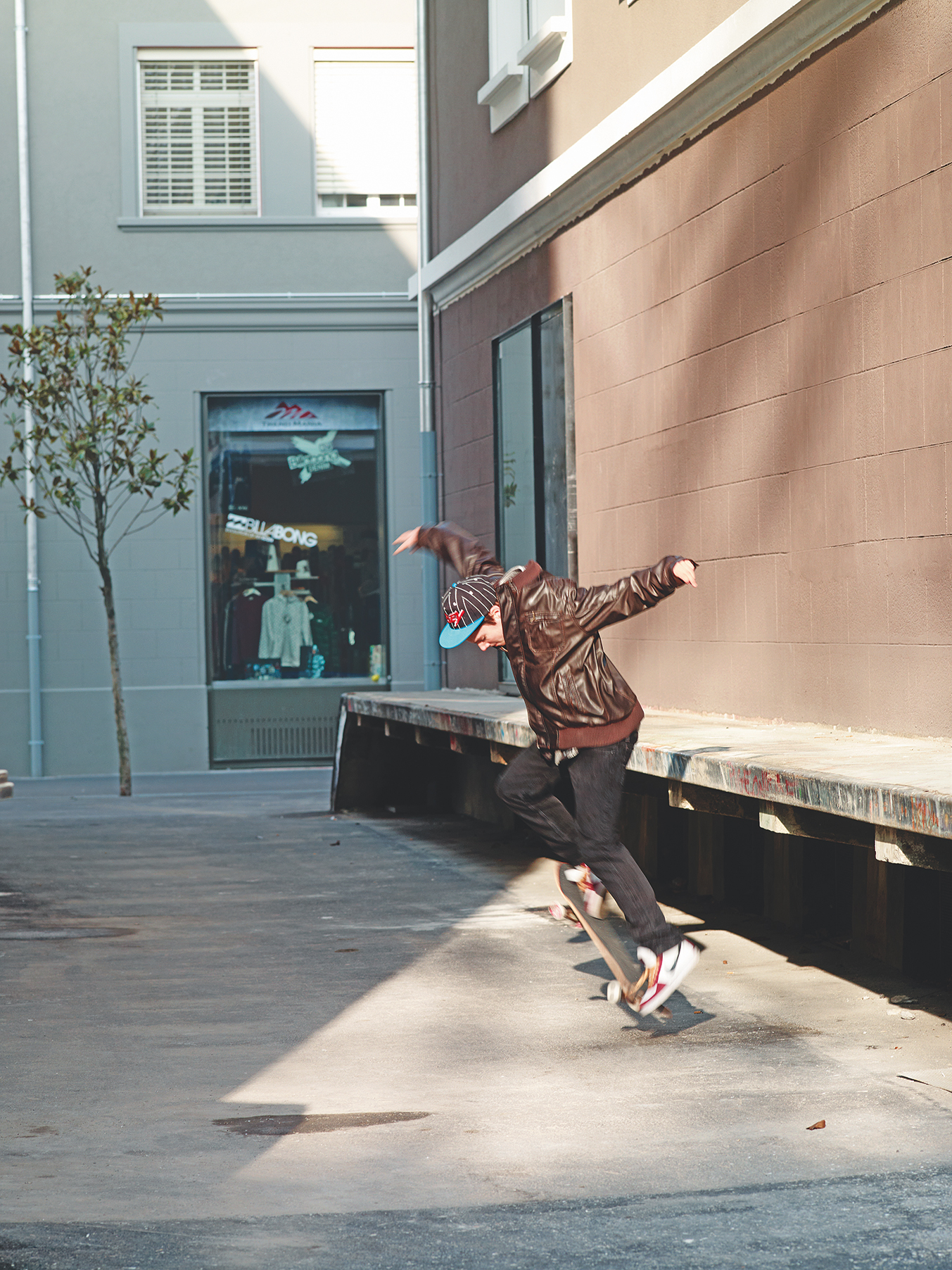
Street style: Flon attracts everyone – locals and visitors alike.
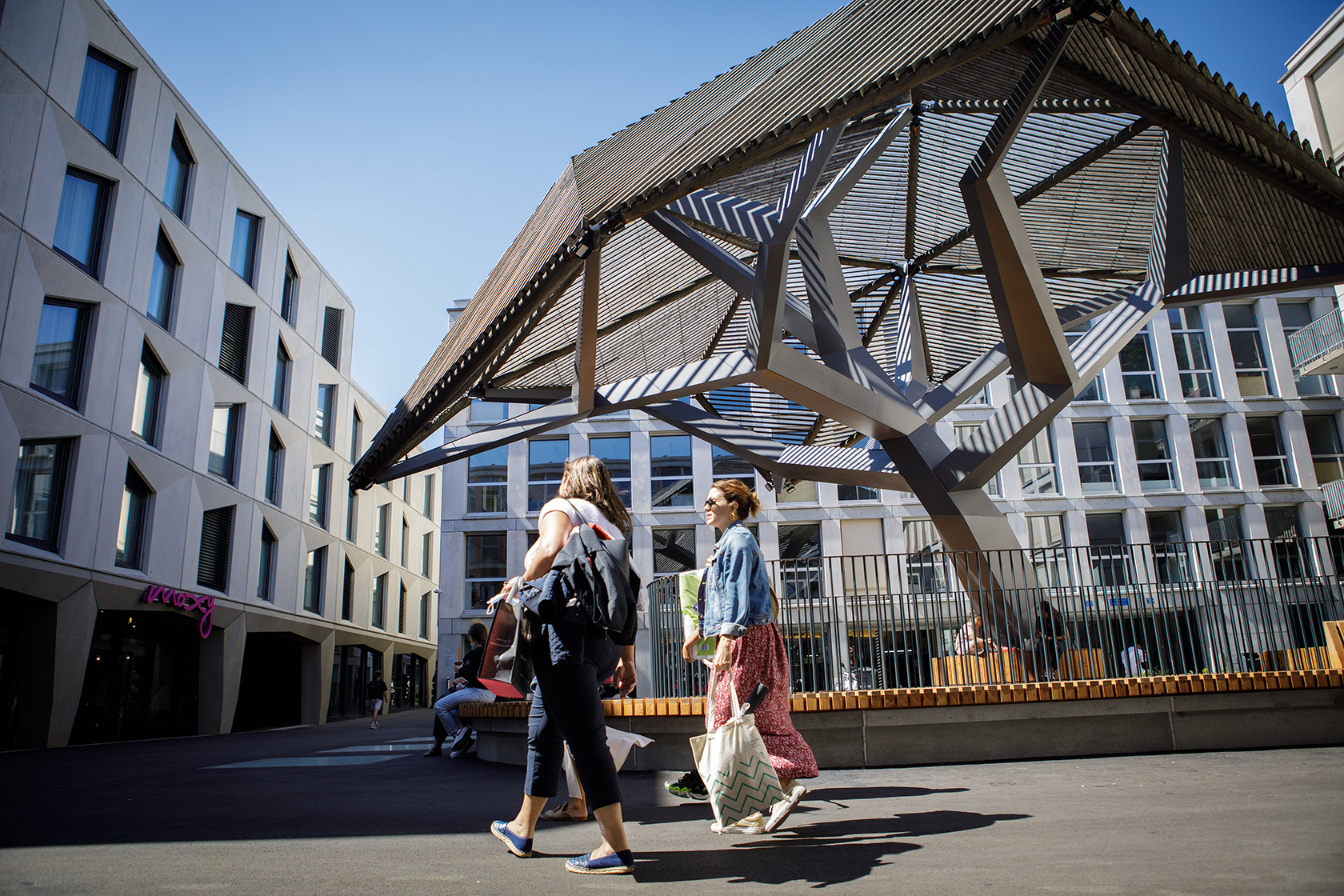
Shade and seating areas in the district: L’Arbre et ses racines, 2007.
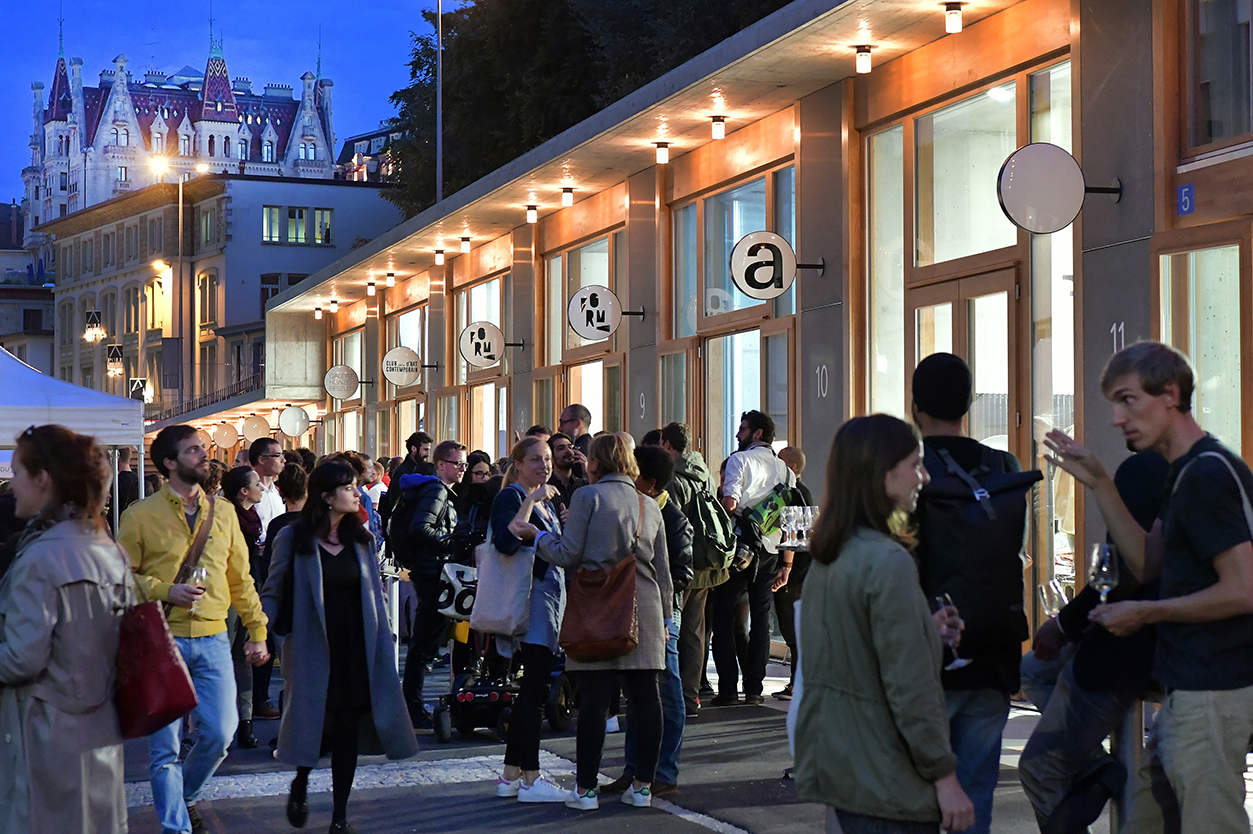
Boulevard: studios, boutiques and galleries in „Les Garages“, 2022.
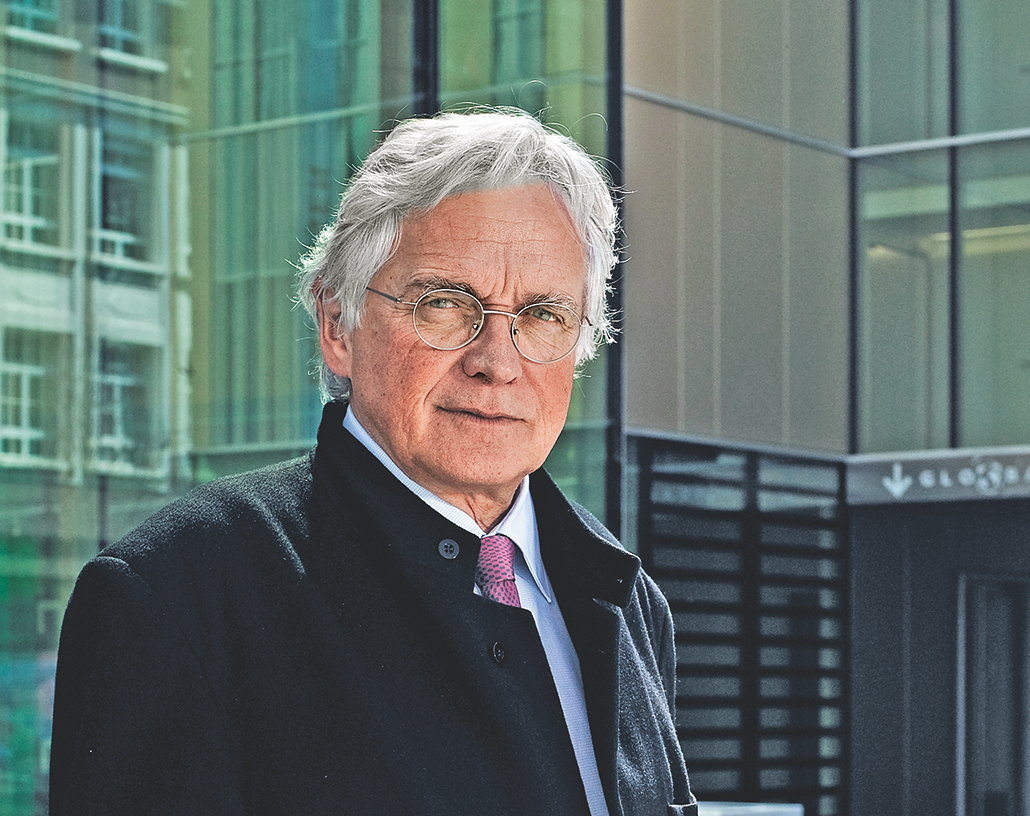
Paul Rambert: “We wanted to discover the district from a different angle.”
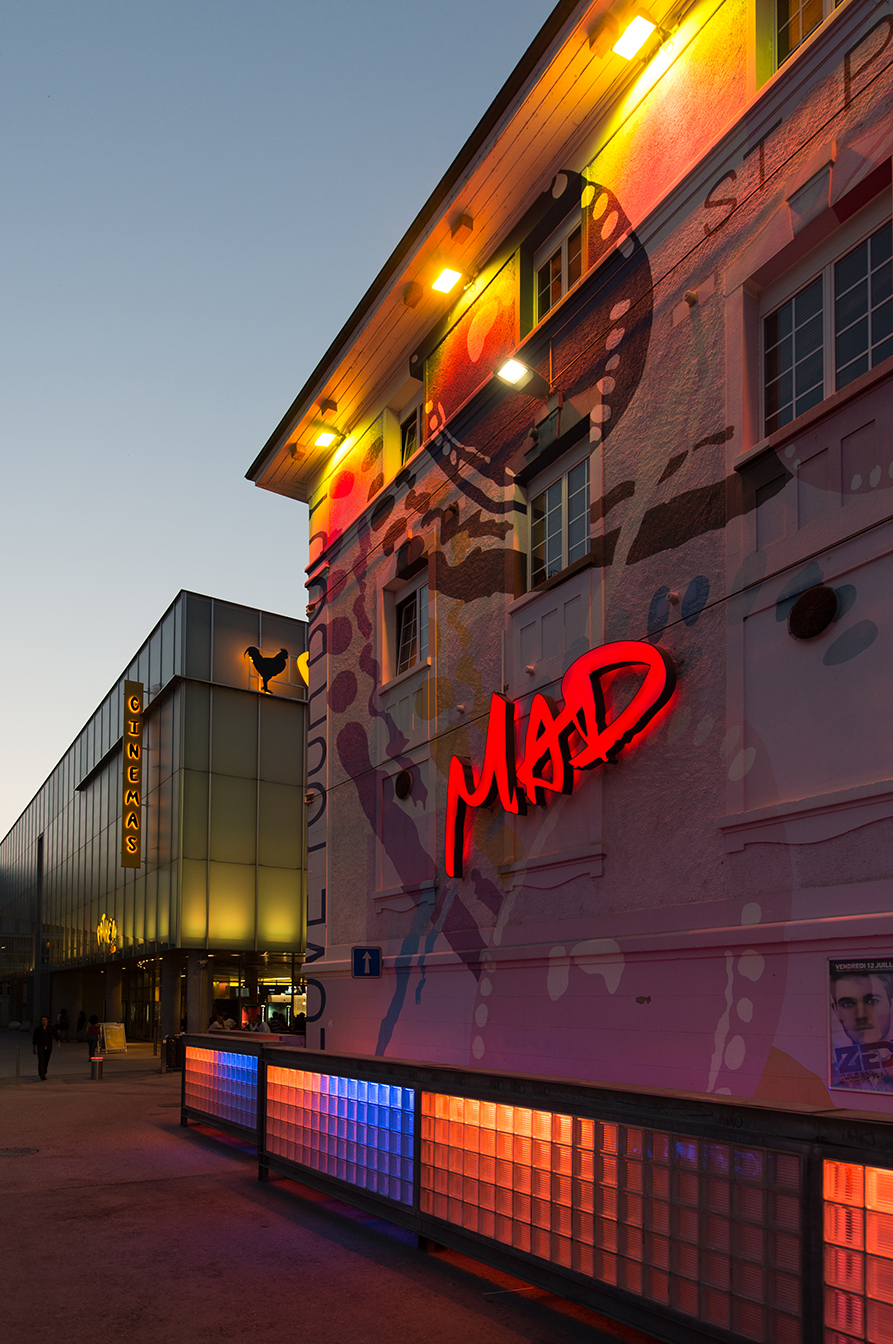
Flon, the social hotspot: the MAD club and Cinema Pathé cinema complex.
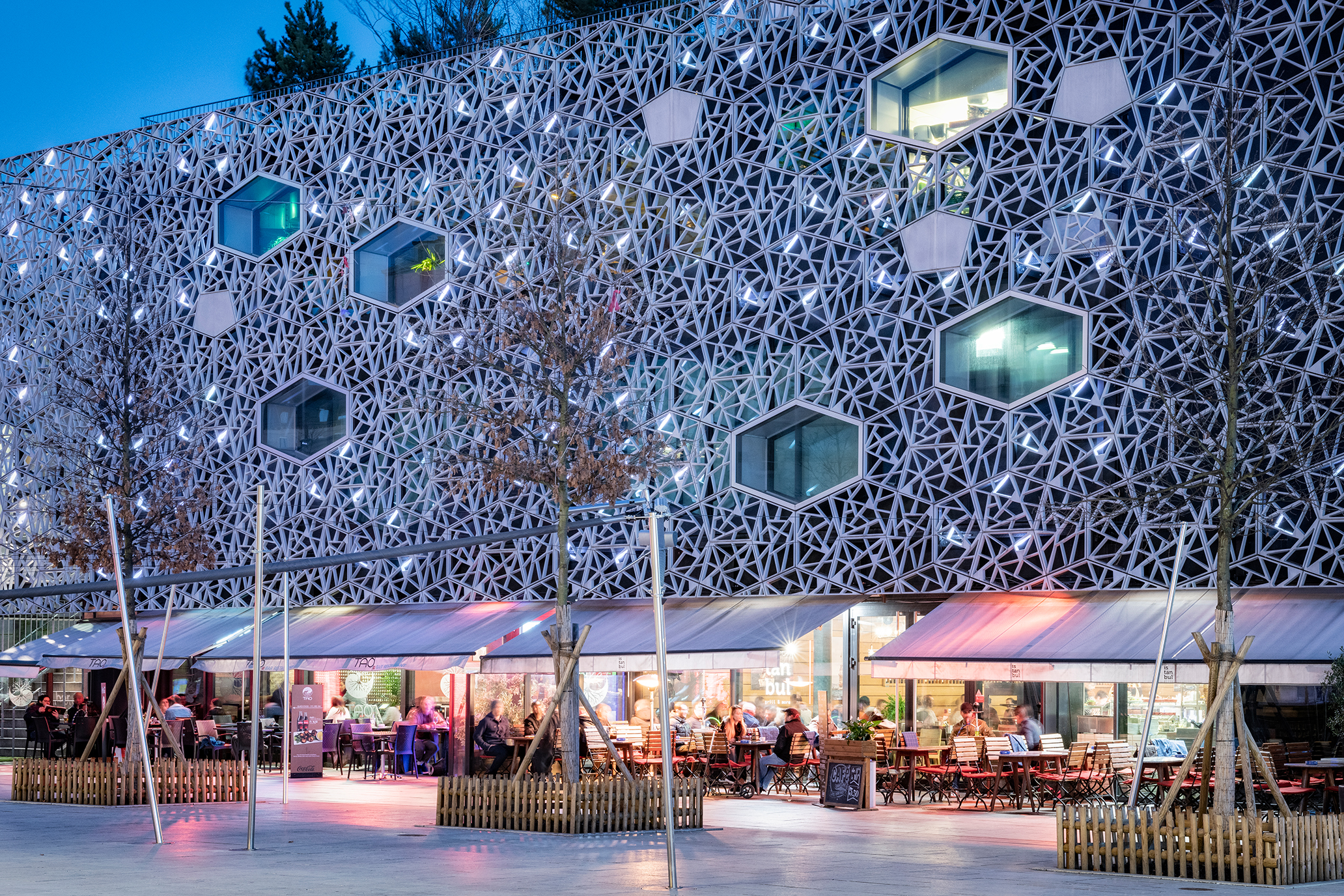
Three buildings, one complex: Les pépinières, 2014.


